How ASI members are leading the charge for Australia’s fabrication future
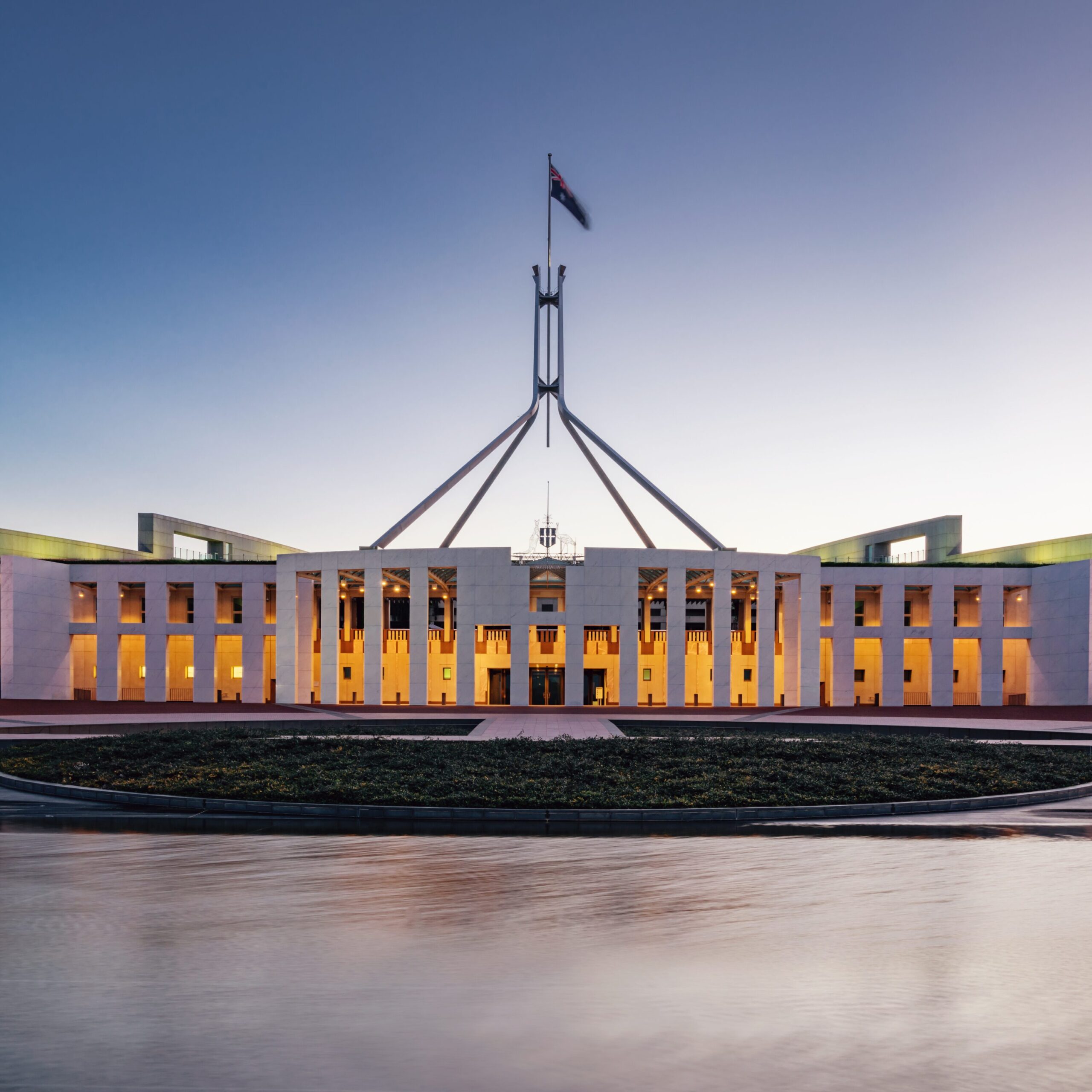
Australia’s fabricated steel sector stands at a defining moment. A surge in imported fabricated structural steel—much of it entering the market at prices local fabricators cannot realistically match—has placed unprecedented pressure on domestic capability. In response, the Australian Steel Institute (ASI) has spearheaded a Safeguard action now under formal investigation by the Productivity Commission, marking one of the most significant industry interventions in recent decades.
But while the policy process unfolds in Canberra, the real story is playing out on workshop floors, in regional fabrication yards, and across boardrooms nationwide. ASI members are not waiting passively for an outcome. They are actively shaping the narrative, advocating for fairer conditions, and demonstrating the value of sovereign manufacturing capability.
From regional Queensland to South Australia and New South Wales, companies such as NEACH, Structural Challenge, Bowhill Engineering and Cullen Steel are stepping forward to support the Safeguard action and make the case for why it matters.
Member engagement essential to restoring a level playing field
The Productivity Commission inquiry represents a direct response to mounting industry concern. Following an application lodged by the ASI—supported by more than 200 member representations to policymakers—the commission is now examining whether safeguard measures, such as tariffs or quotas, are warranted to address the surge in imports.
At the heart of the issue is a growing imbalance. Imported fabricated steel has risen sharply in recent years, with domestic fabricators increasingly undercut by offshore suppliers who operate under different cost structures and regulatory environments. The ASI’s proposal—a tariff rate quota that would apply a 50 per cent tariff above pre-surge import levels—aims to restore a level playing field.
Critically, the success of this process depends not only on the ASI’s submission, but on the breadth and depth of evidence provided by industry participants. That is why member engagement has become such a defining feature of the Safeguard action.
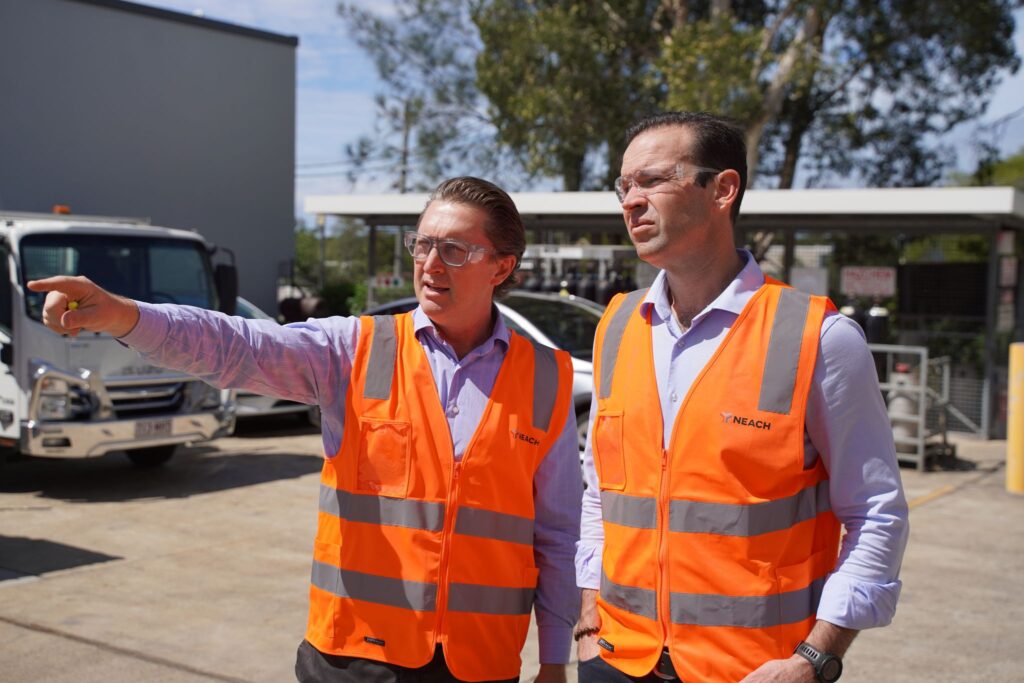
NEACH: taking the case to the workshop floor
For Noosa-based fabricator NEACH, advocacy has been as much about visibility as it has been about policy.
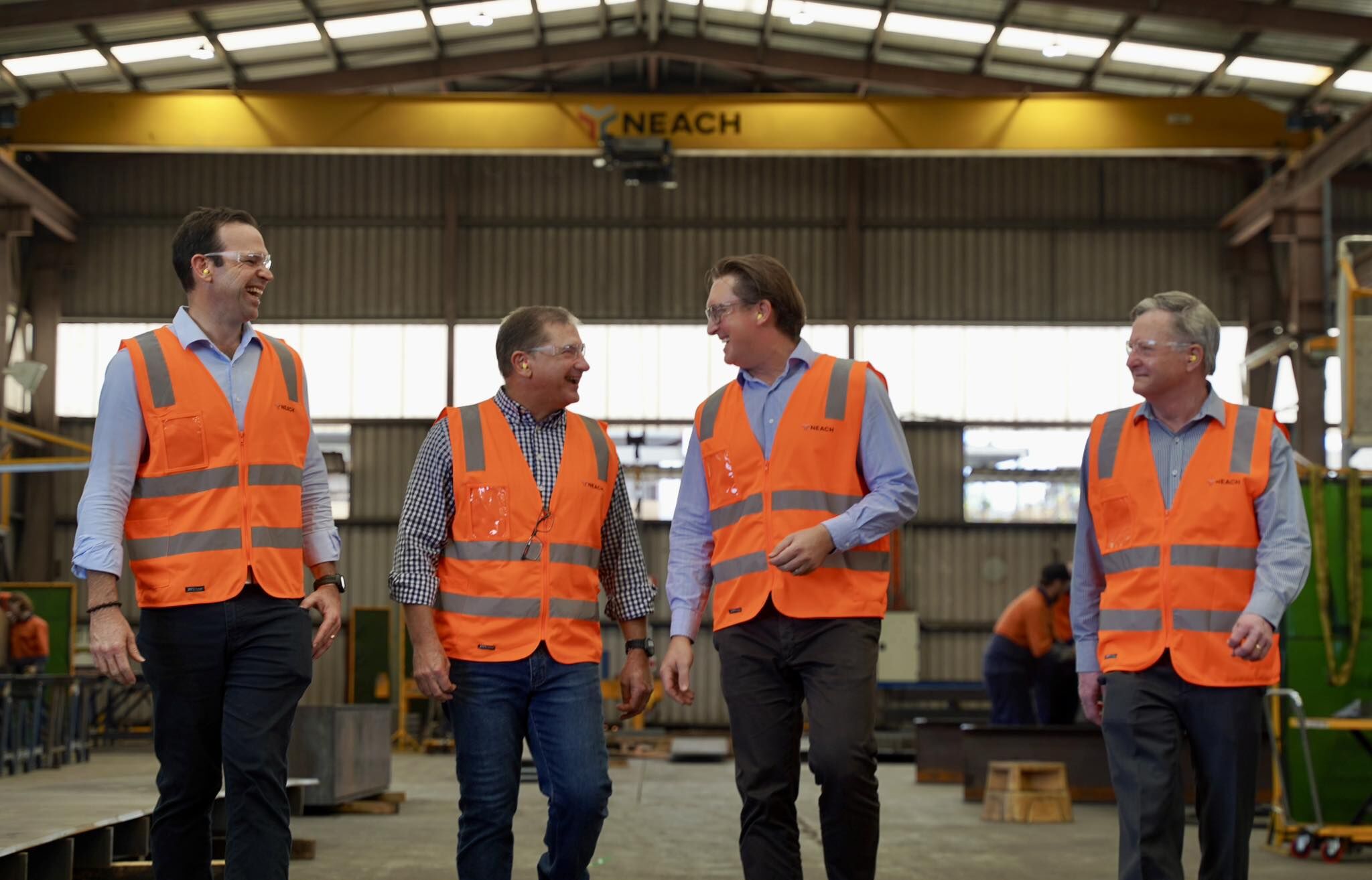
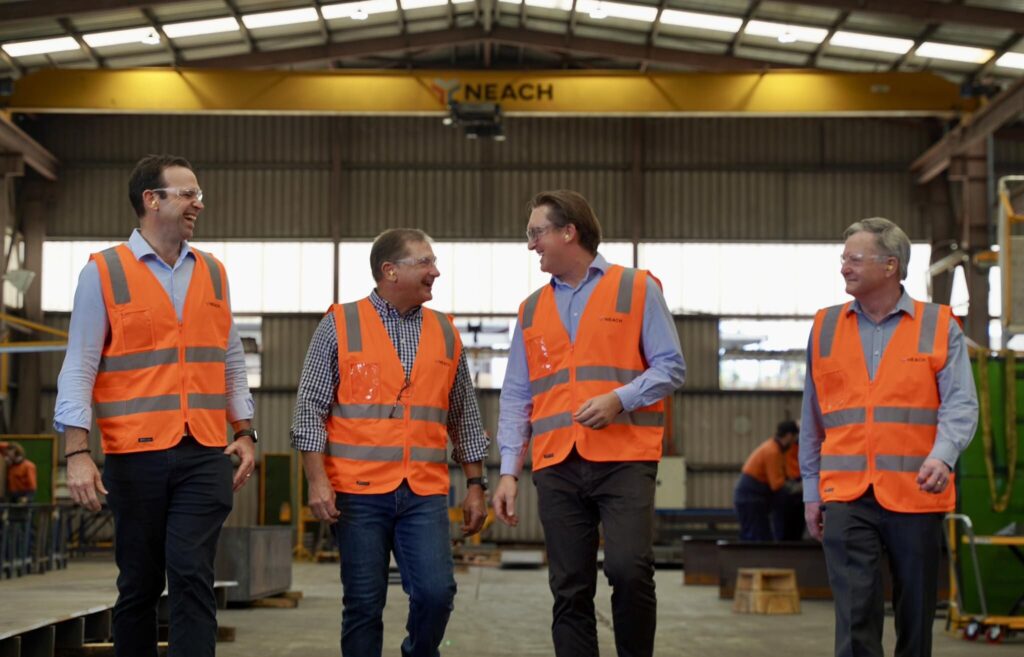
Managing director Ryza Garbacz recently opened the company’s workshop doors to federal representatives, including leader of the National Party Senator Matthew Canavan and MP Llew O’Brien. The visit provided a firsthand look at the realities of regional steel fabrication; something Ryza believes is essential to informed decision-making.
“The conversation around sovereign manufacturing capability in Australia is one we care about,” Ryza said. “Businesses like ours depend on policy settings that support local fabrication, skilled trades, and a pipeline that keeps Queensland workshops running.”
At the centre of NEACH’s message is a fundamental concern: Australian fabricators are held to some of the highest compliance standards globally, yet imported fabricated steel is not always subject to equivalent scrutiny.
“When procurement decisions are made on price alone, that gap becomes a problem—not just for businesses like ours, but for the infrastructure projects that depend on certified, traceable, accountable supply,” Ryza noted.
The company has backed its advocacy with action, formally submitting to the Productivity Commission and placing its commercial experience on record. With AS/NZS 5131 CC3 certification, MRTS78 prequalification and triple ISO accreditation, NEACH represents the level of investment required to operate in Australia’s highly regulated environment.
Yet, as Ryza points out, that investment becomes unsustainable when competing against imports priced well below compliant domestic production costs.
Beyond compliance, NEACH is also emphasising the broader economic contribution of local procurement. “When procurement goes local, the economic effect compounds—GST, corporate tax, payroll tax, wages spent in the community,” Ryza said.
It is a message that aligns closely with the ASI’s broader narrative: that safeguarding steel is not just about protecting an industry, but about preserving economic ecosystems.
Structural Challenge: elevating the national conversation
In Victoria, Structural Challenge has taken a similarly proactive approach, engaging directly with senior policymakers to ensure the industry’s voice is heard at the highest levels.
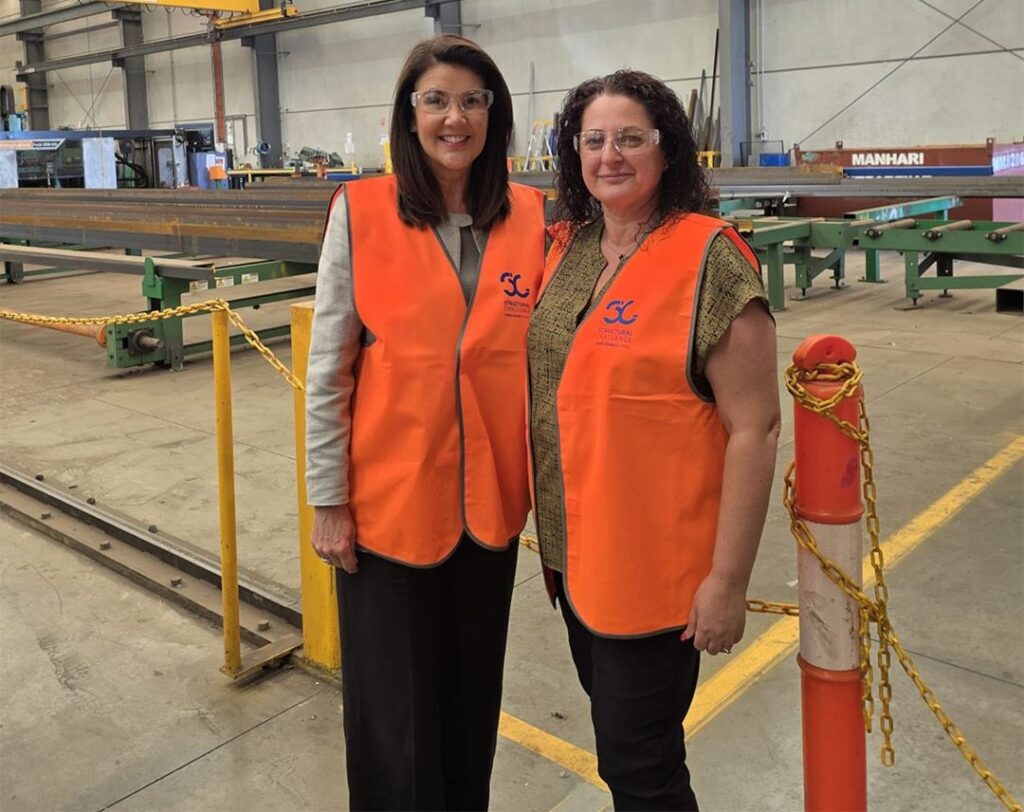
The company recently hosted Senator Jane Hume, deputy leader of the opposition and shadow minister for employment and industrial relations, for discussions on the proposed Safeguard measure.
For director Maria Mavrikos, the engagement underscores the strategic importance of the issue.
“A resilient local steel sector is essential to jobs, infrastructure delivery and national security,” she said. “We appreciate the opportunity to contribute to this important conversation about the future of Australian manufacturing.”
Structural Challenge’s advocacy reflects a broader shift within the industry, from reactive responses to coordinated, forward-looking engagement. By linking steel fabrication to national priorities such as security and productivity, companies are reframing the debate in terms that resonate beyond the sector itself.
This approach has been critical in building momentum behind the Safeguard action, particularly as policymakers weigh the potential economic and trade implications of
any measures.
Bowhill Engineering: capability across all the regions
If advocacy is one pillar of the Safeguard action, capability is the other—and few companies illustrate this better than South Australia’s Bowhill Engineering.
Operating in a regional setting, Bowhill has invested heavily in advanced manufacturing technologies, including robotic welding systems and state-of-the-art CNC machining. The company is currently delivering one of South Australia’s largest infrastructure contracts, showcasing the scale and sophistication achievable within Australia’s fabrication sector.
According to Bowhill CEO Jodie Hawkes, “We’ve lost multiple projects where our Australian-made steel was later undercut by imported fabricated steel by around 50 per cent. There is no commercially viable way to compete with that.”
“We’re not asking for protection from competition. We’re asking for a fair playing field where the same safety, environmental and workplace standards apply to everyone bidding for Australian work.”
“Australian fabricators carry significant compliance obligations that overseas suppliers simply don’t. Those costs are real and they’re currently invisible in procurement decisions.
“When fabricated steel is imported, Australian steel mills miss out, local suppliers miss out and regional jobs become less secure. The economic multiplier stays offshore.”
Its recent engagement with Premier Peter Malinauskas and Minister for Climate, Environment and Water Emily Bourke highlights the growing recognition of regional manufacturing’s role in the national economy.
Bowhill’s message is clear: with the right policy settings, local fabricators can deliver not only jobs and skills, but high-precision, world-class steel solutions.
“Safeguard measures are about stabilising the industry, not closing the door. Without action, we risk losing skilled fabricators and that capability won’t be easy to rebuild.”
In the context of the Safeguard action, this demonstration of capability is crucial. It reinforces the argument that Australia is not seeking protection for an uncompetitive industry, but rather fair conditions for one that is already investing, innovating and delivering at a global standard.
Cullen Steel: the reality check
While some companies are showcasing growth and capability, others are confronting the stark realities of the current market.
The slowdown of China’s construction industry has forced a record amount of steel out of the country, with almost 120 million tonnes exported last year. Australia uses about 8 million tonnes of steel annually, while producing 5.5 million tonnes domestically. With steel tariffs in place in the United States, more Chinese steel is ending up in Australia.
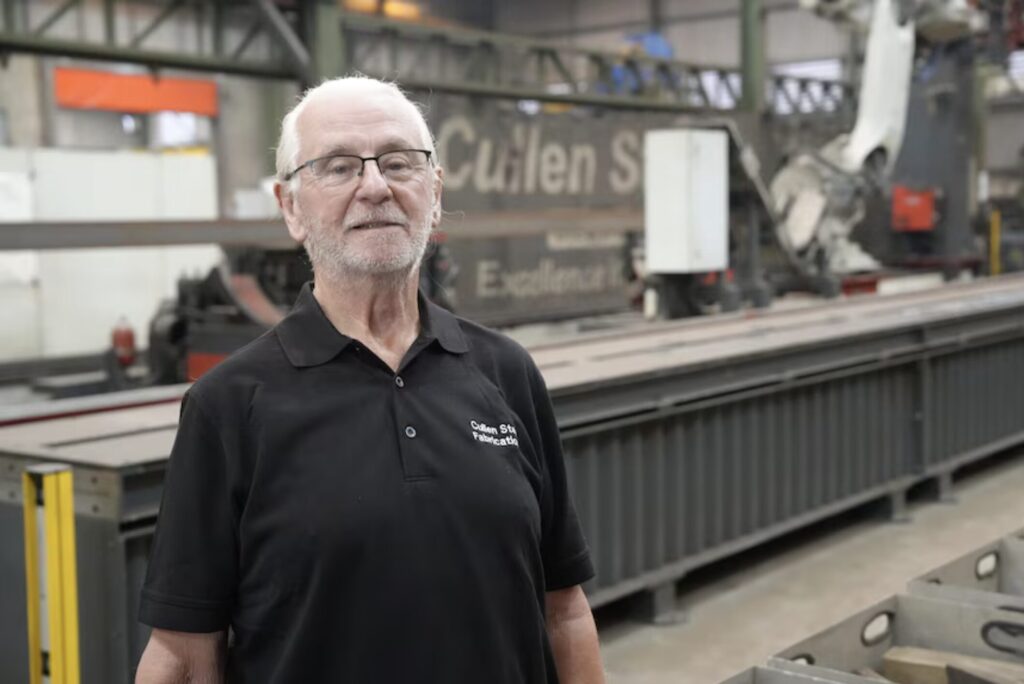
Cullen Steel has become emblematic of the pressures facing the sector. Founded at Mascot in the 1930s, Cullen Steel is one of New South Wales’ oldest steel fabrication companies.
Managing director Ron Barrington has spoken candidly about the impact of surging imports, with the company’s revenue falling dramatically amid intensifying competition.
“We’re running almost unprofitably at the moment and hanging in there hoping things might get better,” Ron said. “But if it doesn’t, we’ll have to make some drastic decisions.
“The business has such a long history, it would be sad to see it not continue.”
Despite significant investments in efficiency—including robotic welding and cost reduction measures—the company has been unable to match offshore pricing, with some imported quotes reportedly up to 50 per cent cheaper.
“We have initiated a lot of cost-saving measures,” Ron said. “We invested very heavily into robotic welding, and we have brought our costs down by a similar amount.”
The consequences have been severe: workforce reductions, a shift toward smaller projects, and growing uncertainty about the future. Ron said since the 2023-2024 financial year revenue had dropped from $29.2 million to $10 million projected for this financial year. “We’ve lost in excess of $20 million,” said Ron. “When our turnover is less than $30 million, that’s a huge drop.”
Cullen Steel’s experience underscores the urgency of the Safeguard action. It is not a theoretical debate, but a real-time challenge affecting businesses, jobs and supply chains across the country.
As Ron warns, the stakes extend beyond individual companies. “We won’t have an industry—it is possible,” he said.
Collective action: the power of member engagement
What sets the current Safeguard action apart is the scale of industry mobilisation. From letter-writing campaigns and political engagement to formal submissions and media advocacy, ASI members have played a central role in bringing the issue to national attention. More than 200 representations to politicians helped trigger the Productivity Commission inquiry, demonstrating the power of coordinated action.
The Safeguard action is, at its core, about balance. It seeks to ensure that Australia remains open to trade while maintaining the capability to fabricate steel domestically—a capability that underpins infrastructure delivery, economic resilience and national security.
For ASI members, the journey is far from over. The coming months will require continued engagement, robust evidence and a unified voice. Yet, if the efforts of NEACH, Structural Challenge, Bowhill Engineering and Cullen Steel are any indication, the industry is more than ready for the challenge. They are not just advocating for safeguards—they are demonstrating why Australia’s steel fabrication sector is worth safeguarding in the first place.