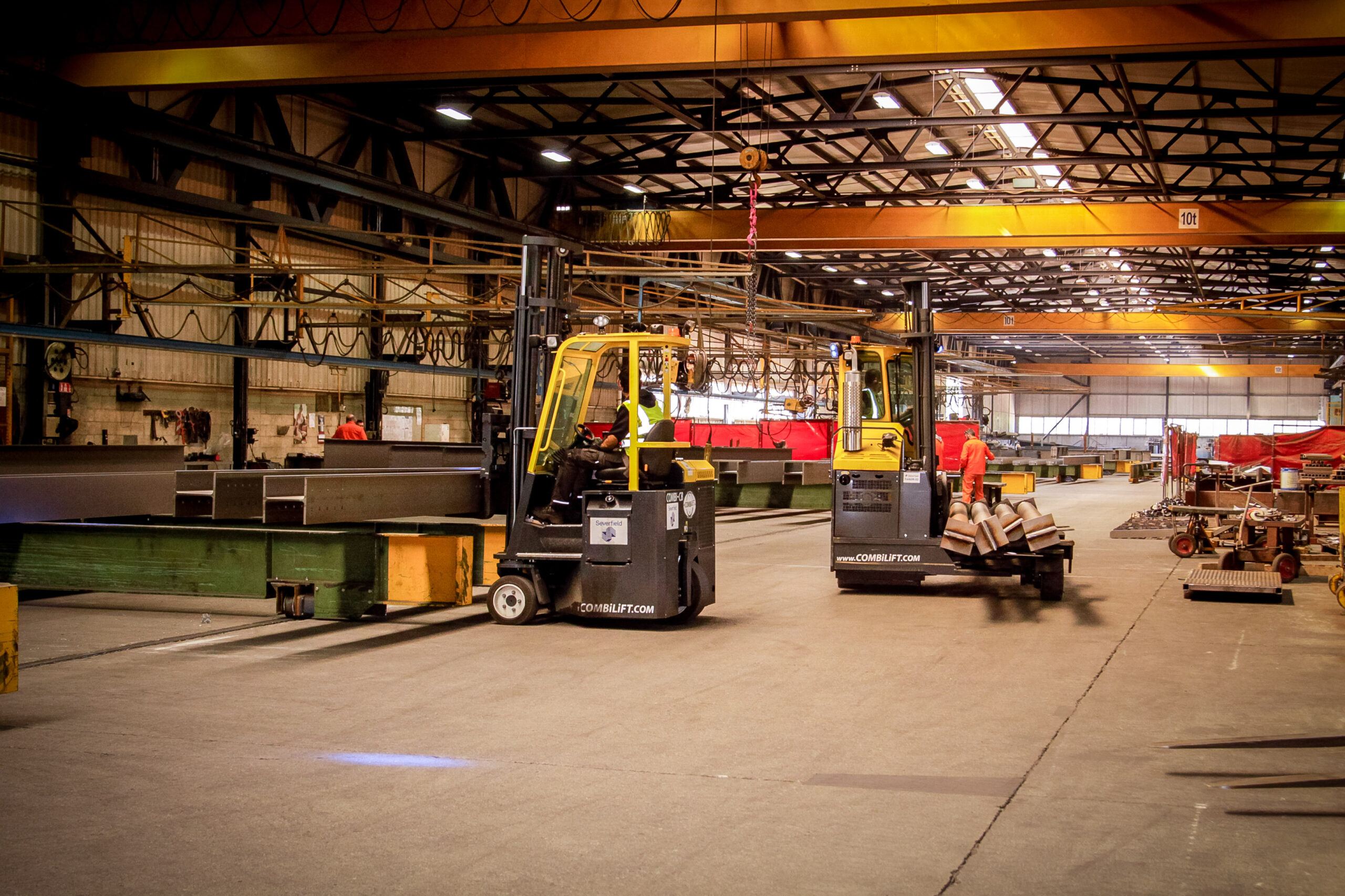
Behind the steel that shapes Australia’s skylines, ports and projects, Combilift’s machines are quietly doing the heavy lifting.
Stand under the Sydney Harbour Bridge at dawn, or watch the cranes swing over Brisbane’s ever-changing skyline, and you’re looking at the visible end of the steel industry. But between the mill and project completion, every beam, coil and length of pipe in this country makes a thousand small, unglamorous journeys: off trucks, down aisles, across yards, into racks and out again. Get those journeys wrong and projects stall, products are damaged and people get hurt. Get them right and nobody notices at all.
It’s that invisible middle of the supply chain that Combilift has spent nearly three decades quietly mastering.
“Steel is our biggest market in Australia, and it’s the industry that has taught us the most,” says Chris Littlewood, Combilift’s Country Manager for Australia.
“For the best part of 25 years, Australian steel businesses have been coming to us with the same kind of challenge: loads that are too long, aisles that are too narrow, and no room to build bigger. Their problems have genuinely shaped our product range. We design machines around the job, not the other way around, and Australian steel has supplied plenty of jobs worth designing around.”
The Irish manufacturer built the world’s first internal-combustion multidirectional forklift in Monaghan in 1998, and has since put more than 100,000 machines to work in over 85 countries. Australia has been one of its strongest markets almost from the start, with thousands of units now operating across steel, manufacturing, precast, mining and logistics.
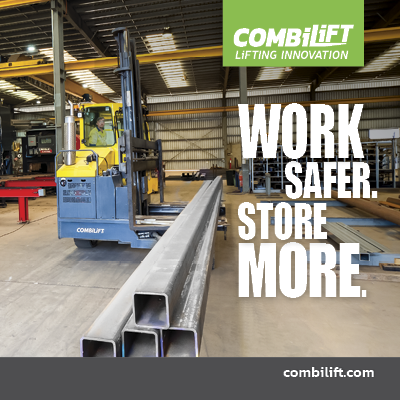
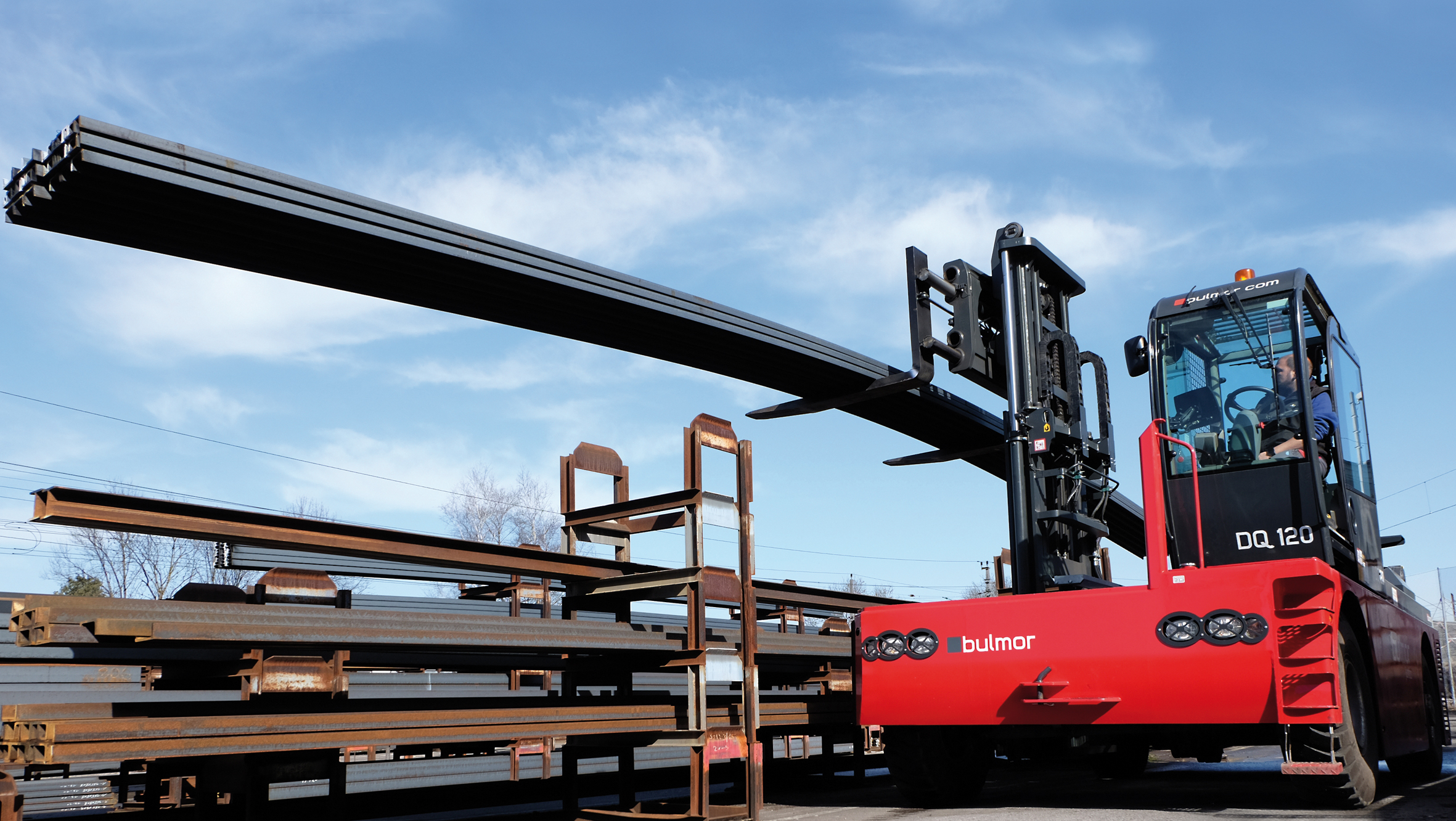
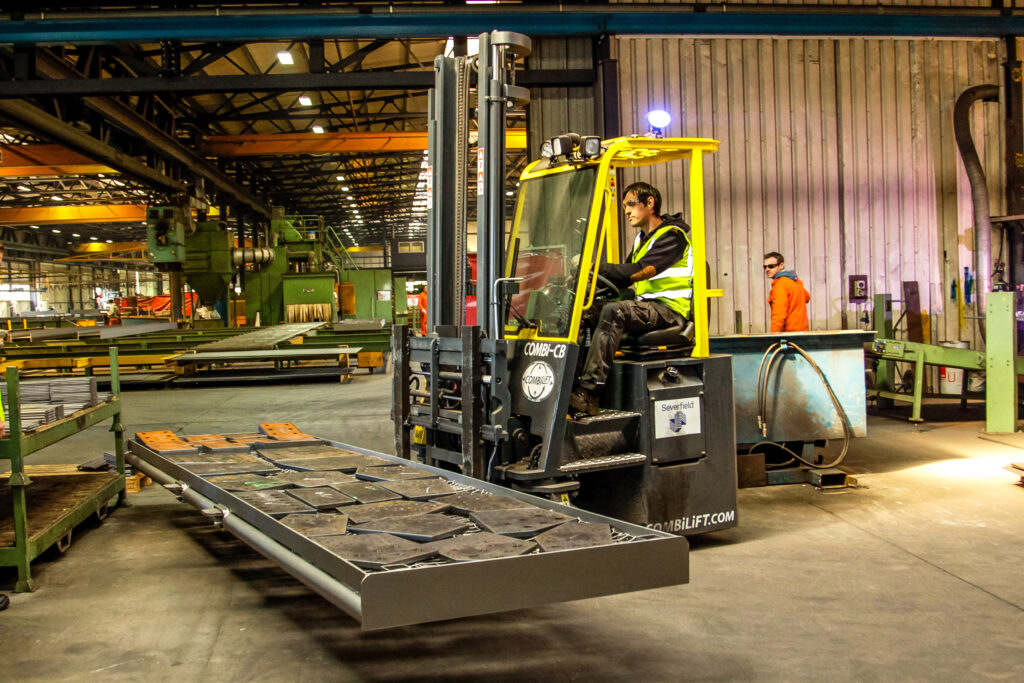
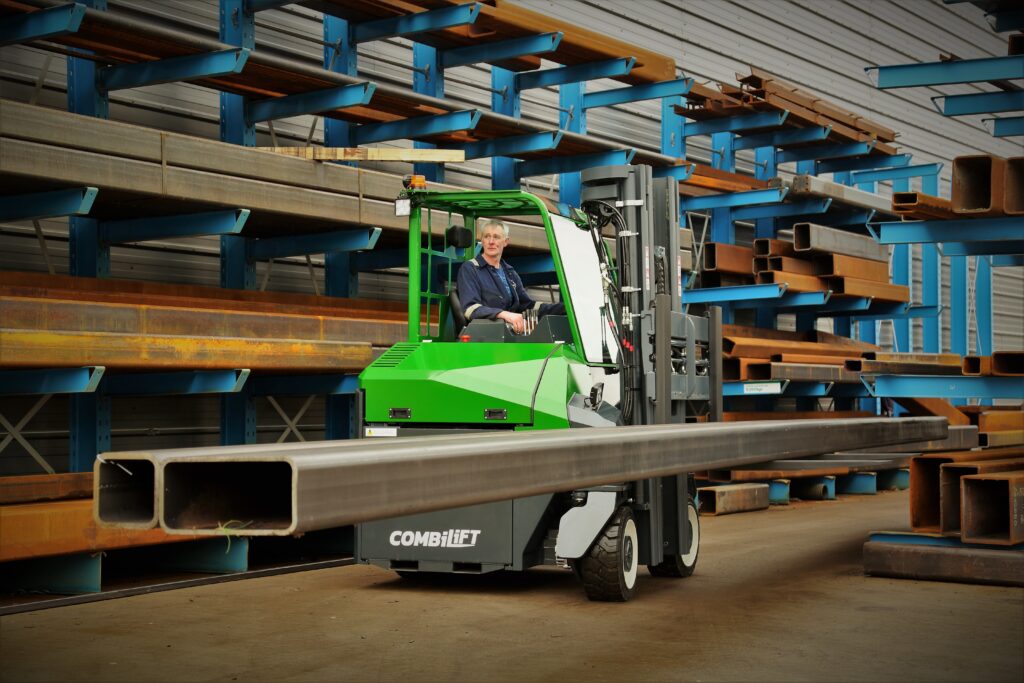
For steel specifically, the logic has never changed: long, heavy, awkward loads, and never quite enough room to move them. The C-Series multidirectional range (up to 25-tonne capacity, in diesel, LPG and electric) carries beams and plate sideways, low and close to the chassis, so a 15-metre length can travel down an aisle barely wider than a pallet.
Brisbane fabricator Watkins Steel runs C-Series machines on beams up to 18 metres, and credits the layout that capability enabled with a significant lift in efficiency. Steel building products manufacturer Metroll tells a similar story: tighter racking, safer long-load handling, more production out of the same shed.
That, Littlewood argues, is where the real value hides; not in the machine itself, but in what it quietly removes from an operation.
“Our customers don’t buy forklifts because they love forklifts,” he says. “They buy fewer movements. Faster handling. Better use of every square metre of warehouse and yard. More control over heavy loads, and safer workflows for operators and everyone else walking around a site. If we’re doing our job properly, what we actually deliver is the absence of problems — and the absence of problems is a hard thing to see.”
At the heavy end of the range, the Combi-SC straddle carrier, which is custom-built to capacities of up to 150 tonne, moves fabricated assemblies, containers and oversized components across yards and semi-rough ground without the cost of resurfacing, with remote operation keeping people clear of the load. At the other end, compact electric machines and the autonomous Combi-AGT sideloader handle long steel in narrow aisles around the clock.
All of Combilift’s products are backed by local support, something Littlewood is quick to emphasise.
“A machine standing still is no partner at all,” he says. “Local service, local parts, local people who answer the phone . None of that is an afterthought for us. Steel doesn’t wait, so neither can your support.”
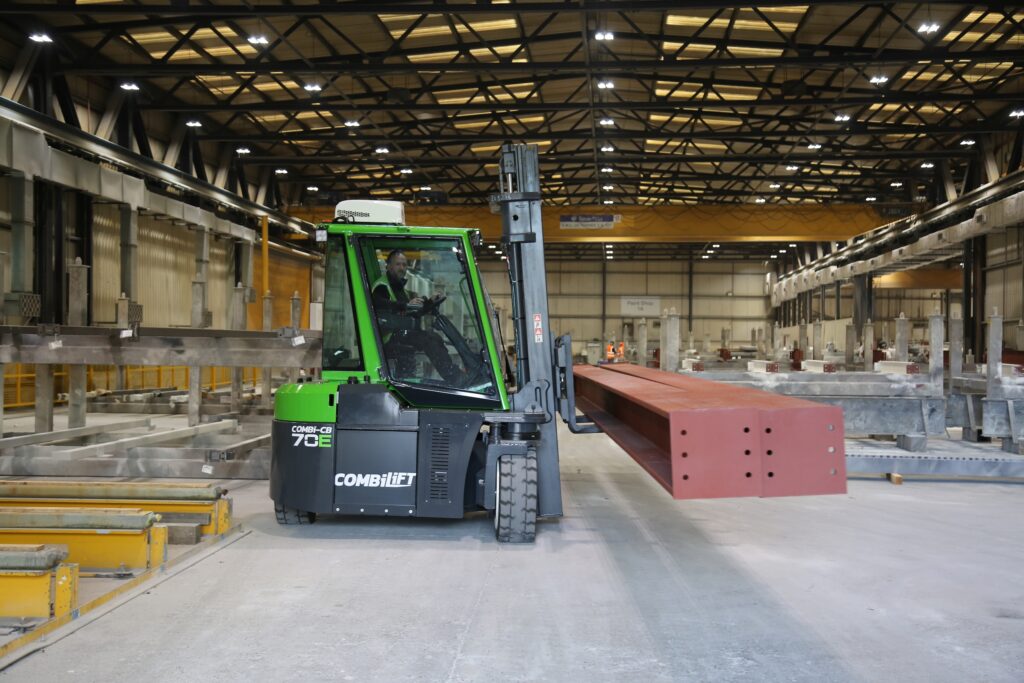
Continuing to invest around seven per cent of revenue into R&D, Combilift has spent recent years electrifying the C-Series to 18-tonne capacities, collecting international design awards for the compact Combi-CB70E, and rolling out telematics that give fleet managers real-time visibility of their machines. Where it goes next, Littlewood suggests, will be decided the same way it always has been, by whatever the industry needs.
“The world keeps growing, so steel isn’t going anywhere. Or rather, it’s going everywhere,” he says. “Data centres, renewables, defence, housing, all these projects need steel, and it all has to be moved.”
“Our three decades of experience alongside Australian steel has been built on trust, ideas and partnership, in that order,” Littlewood says. “The trust to tell us what’s really slowing you down, the ideas that come from putting your operators and our engineers in the same room, and a partnership that outlasts any single machine.”
“Steel shapes the world around us. We’re proud to be the ones in the background, helping keep it moving, and we intend to still be there in another 25 years.”
For more information, visit combilift.com