Brisbane Olympics 2032: Local Capability
Australian steel is ready to deliver Brisbane 2032
As Brisbane prepares to host the world in 2032, the scale of opportunity before Queensland, and the nation, is extraordinary. The Olympic and Paralympic Games will not only showcase Australia’s sporting prowess, but also its engineering excellence, industrial capability and sovereign strength.
At the centre of that story stands Australian steel.
From primary production to fabrication, detailing, coating, distribution and logistics, the Australian steel supply chain is primed, proven and ready to deliver the infrastructure that Brisbane 2032 demands. The evidence is unequivocal: local capability is strong, competitive and economically transformative.
Queensland’s construction boom
Queensland construction investment is forecast to rise to $59.8 billion by FY31 – a 44.9 per cent increase on current levels, marking one of the strongest growth profiles in the nation. Publicly funded construction alone is projected to reach $15.7 billion by FY30.
Steel consumption in Queensland’s construction sector is expected to exceed 1.3 million tonnes by FY31, driven by transport infrastructure, health and education facilities, renewable energy projects and Olympic venues.
As at April 2026, the Queensland Major Contractors Association (QMCA) estimates that the Olympics will require approximately 35,000 to 40,000 tonnes of fabricated steel, approximately 8,000 tonnes per annum. It should be noted that the Games Independent Infrastructure and Coordination Authority (GIICA) has yet to provide estimates.
ASI’s Queensland fabricators have a collective capacity of 314,000 tonnes per annum. As such, the Olympic demand is currently estimated at less than 2.5 per cent of the available Queensland fabrication capacity.
The question is not whether Australia has the steel capability to deliver. The data shows that it does. The real question is how much of that opportunity Queensland chooses to capture locally. Queensland’s steel fabrication sector includes a network of SMEs and larger firms able to:
- Share workload across multiple facilities
- Scale production to suit staged procurement programs
- Deliver reliably without exposure to international freight disruptions
Local supply avoids risks like shipping delays, port congestion, customs hold ups, and large upfront payments are often required for offshore fabrication. For time-critical Olympic infrastructure, program certainty is essential.
The economic multiplier: steel’s golden dividend
Steel’s economic impact extends far beyond mills and fabrication workshops. Nationally, the steel supply chain demonstrates one of the highest multiplier effects in the economy. Steel’s multiplier effect sees as many as six workers employed in related industries for each person employed in the steel industry. In addition, for every $1 million of steel revenue:
- $1.87 million is added to the economy
- 16 FTEs are employed in the economy
- $165,000 in welfare savings is realised
- $590,300 is contributed to the national budget in tax revenue (State of Steel Report, Type I and Type II, page 4 and 5)
At a time when sovereign capability, regional employment and economic resilience are national priorities, these numbers matter. Steel is not just another industry. It is a cornerstone of Australia’s economic strength and resilience. Supporting a strong, competitive steel sector means supporting jobs, driving productivity, and delivering lasting value across the entire economy.
Capability across the entire steel value chain
Delivering Olympic infrastructure requires more than raw steel. It demands an integrated, standards-driven, technologically advanced value chain. Australia has exactly that.
Manufacturing strength
BlueScope’s Port Kembla Steelworks alone produces approximately 3.2 million tonnes of crude steel annually. InfraBuild operates electric arc furnaces with 1.5 million tonnes capacity. OneSteel Manufacturing’s Whyalla Steelworks adds a further 1.25 million tonnes of cast steel and hot rolled products. Together, these operations provide flat products, long products, reinforcing steel, rail, plate, pipe and specialty steels manufactured to Australian Standards, backed by ISO-certified quality systems.
Fabrication capacity
Australia’s structural fabrication sector has total output capacity of approximately 1.6 million tonnes per annum, supported by heavy investment in CNC beam lines, plate rolling, plasma cutting and advanced automation. Queensland alone hosts multiple fabricators with capacities exceeding 10,000 tonnes annually, alongside a deep network of medium and specialist fabricators capable of supporting staged, just-in-time Olympic delivery programs.
Distribution and logistics
More than 300 distribution outlets nationwide and over two million tonnes of inventory provide depth, flexibility and rapid response capability. Local distributors offer CNC processing, profiling, cutting and pre-assembly services, reducing lead times and on-site handling risks. For a multi-venue Olympic program with complex staging and sequencing, that supply surety is invaluable.

Quality, compliance and sustainability
Australian steel is produced and fabricated within one of the world’s most rigorous compliance frameworks. From material specifications (AS/NZS 3678 and AS/NZS 3679) through to structural design (AS 4100) and welding (AS/NZS 1554), the industry operates under a fully integrated system of Australian Standards, supported by independent certification and verification pathways.
Steelwork Compliance Australia (SCA), for example, provides third-party auditing and certification for the supply, fabrication and erection of structural steelwork to AS/NZS 5131, as well as certification to AS/NZS ISO 3834 for welding quality requirements, giving project teams greater confidence that steelwork has been produced under audited, project-aligned systems.
In addition, Steel Sustainability Australia (SSA) certification provide a practical way for project teams to identify suppliers that have been independently assessed against environmental, social and governance criteria across the steel supply chain, while also supporting responsible procurement outcomes.
SSA is recognised as a Type 1 Environmental Label under the Infrastructure Sustainability Council’s rating tools, and endorsed as a best practice initiative within the Green Building Council of Australia’s Green Star rating tools. SSA certification ensures that steel supplied to projects meets the highest sustainability standards for both building and infrastructure developments.
The advantage for Olympic delivery authorities is clear: full traceability, improved sustainability, certified compliance, reduced rework risk, lower inspection and rectification costs, and stronger safety performance. In an Olympic context, where timelines are immovable and reputational stakes are global, risk mitigation is not optional; it is essential.
Beyond 2032: a legacy of capability
The Brisbane Olympics represent more than a two-week event. They are a once-in-a-generation nation-building program. Local steel procurement does more than supply beams and columns. It strengthens sovereign manufacturing, supports regional employment and returns billions in economic activity.
For Brisbane 2032, the equation is compelling: a marginal shift in procurement settings unlocks substantial economic dividends.
Australia’s steel industry has built the nation’s railways, ports, stadiums, bridges, hospitals and high-rise skylines. As Queensland steps onto the global stage, the message is clear: Australian steel is ready to carry the weight of Brisbane 2032, and to forge a legacy that endures long after the final medal is awarded.
Proven capability in delivering major sporting venues
The landmark projects featured below aren’t just great examples of Australian steel in action. They are real-world case studies demonstrating industry’s ability to deliver complex, large-scale sporting and major event infrastructure on time, on budget and to world-class standards.
From stadiums and arenas to transport hubs and precinct build-outs, these projects showcase the depth of expertise, manufacturing strength and fabrication excellence that exists right here in Australia. They highlight how local producers, fabricators, designers and constructors have collaborated to meet demanding performance, safety and quality requirements; the very standards that Brisbane 2032 will demand.
As Australia prepares to host one of the largest events in our nation’s history, these success stories provide confidence that our steel industry has both the capacity and capability to help deliver the Olympic legacy for Queensland and the nation.
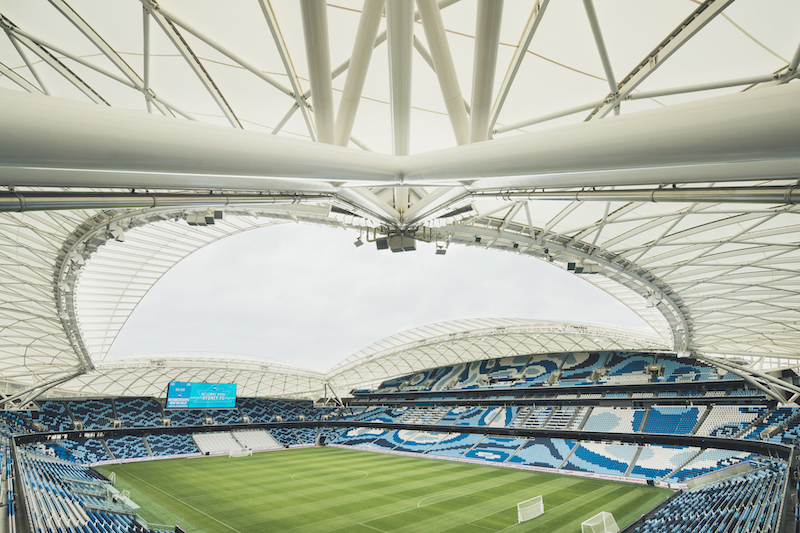
Allianz Stadium in Sydney
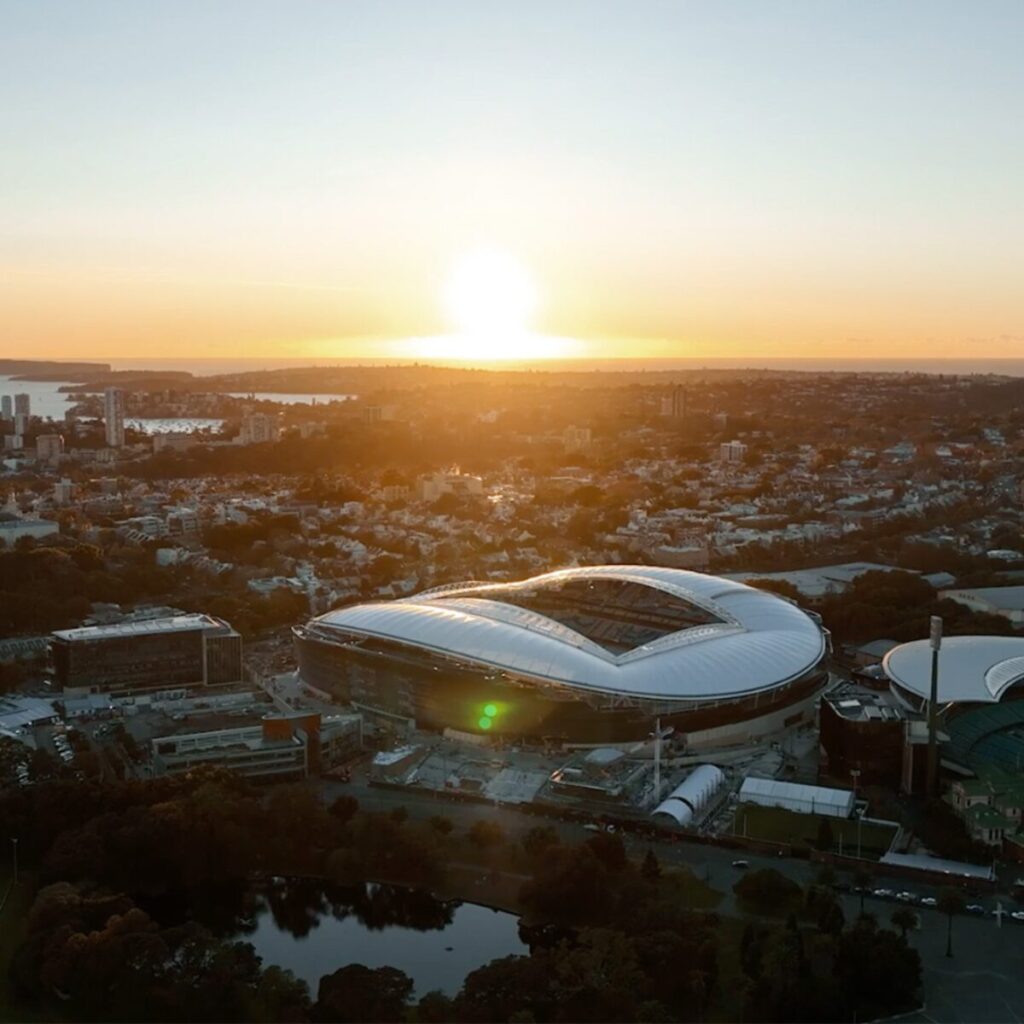
The new Allianz Stadium is a modern, world-class venue that will provide Sydney with a sporting and entertainment precinct of an international standard for decades to come. The NSW Government invested over $830 million in the development of the new 42,500 seat stadium. The new stadium consists of over 5,000 tonnes of Australian fabricated steel through the bowl, roof, façade and miscellaneous items.
Geoff Henke Olympic winter training centre
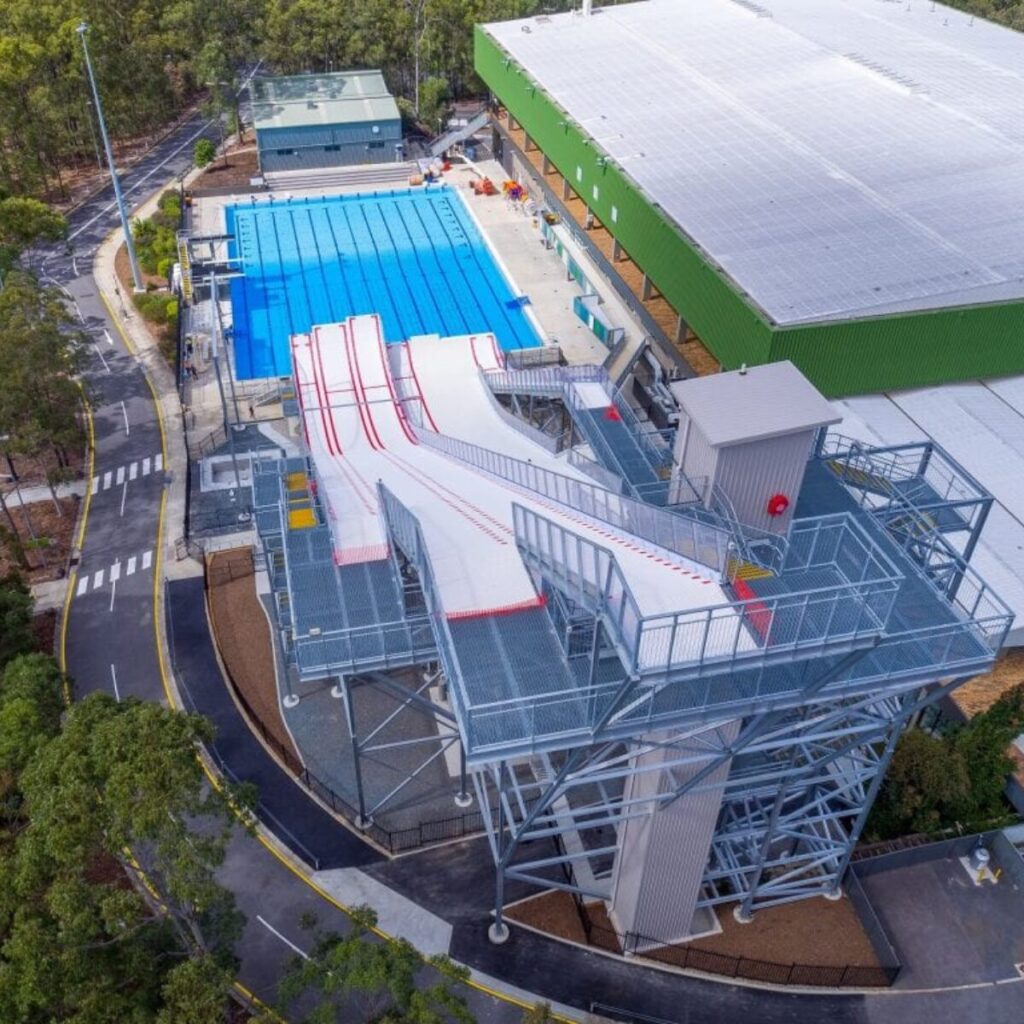
Located within the Sleeman Sports Complex in Brisbane, the Geoff Henke Olympic Winter training centre is a world-class facility, being the first of its kind in the southern hemisphere. This freestanding 289 tonne steel structure reaches 35m at its highest point and hosts seven jump profiles suitable for the various aerial disciplines ranging from moguls to slopestyle.
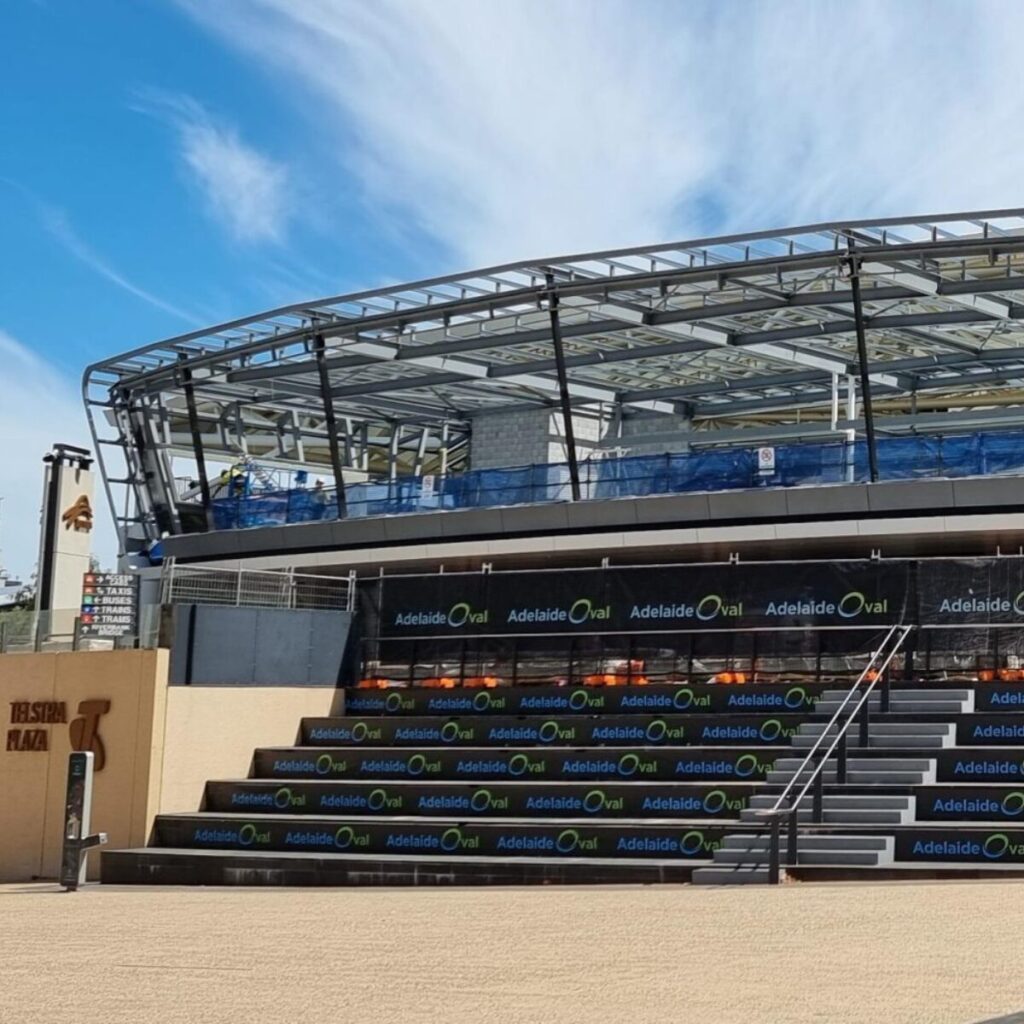
Memorial Drive Tennis Centre in Adelaide
The redevelopment of the Memorial Drive Tennis Centre in Adelaide involved the addition of a diagrid roof steel canopy supported on four feature corner columns. The roof radius and diagrid member layout were optimised, by harnessing the capability of a dome shape, to span a large distance. The members that form the roof structure were welded into 16 transportable segments, and bolted onsite.
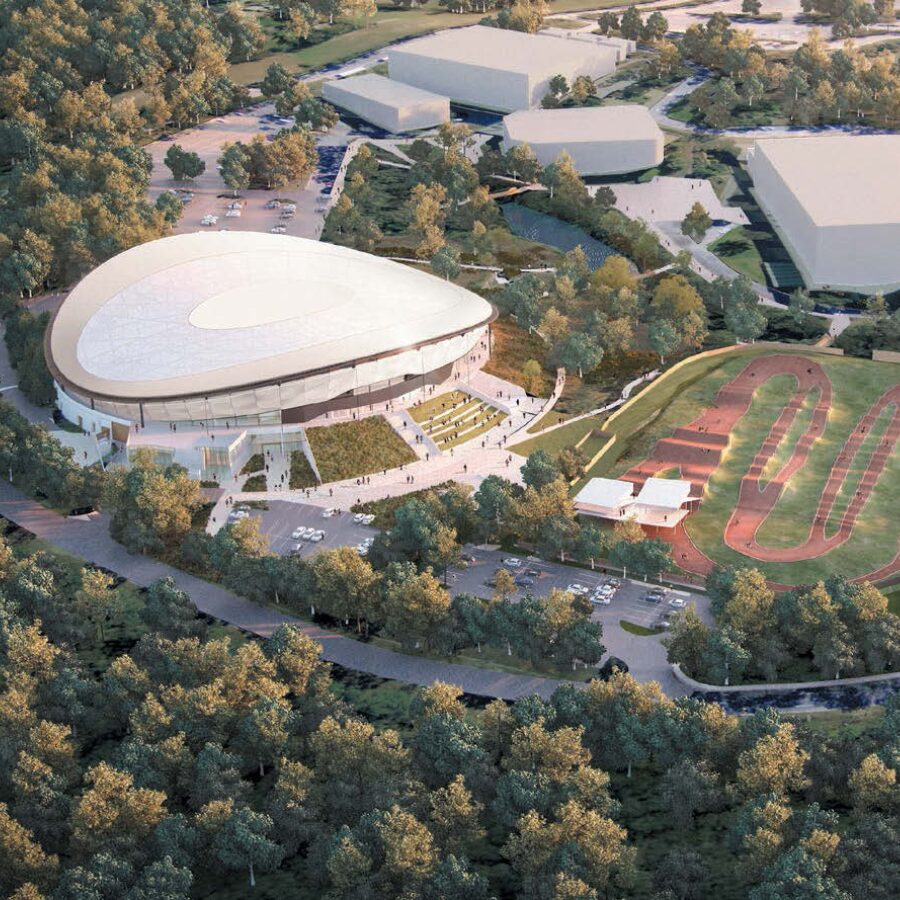
Clear views of world’s best cycling under the one roof
A lightweight steel frame is enabling one of the broadest clear spanning roof structures in Australia to be installed over an international standard cycling track and associated facilities for the new Queensland State Velodrome to be ready to host track cycling competition for the Gold Coast 2018 Commonwealth Games.
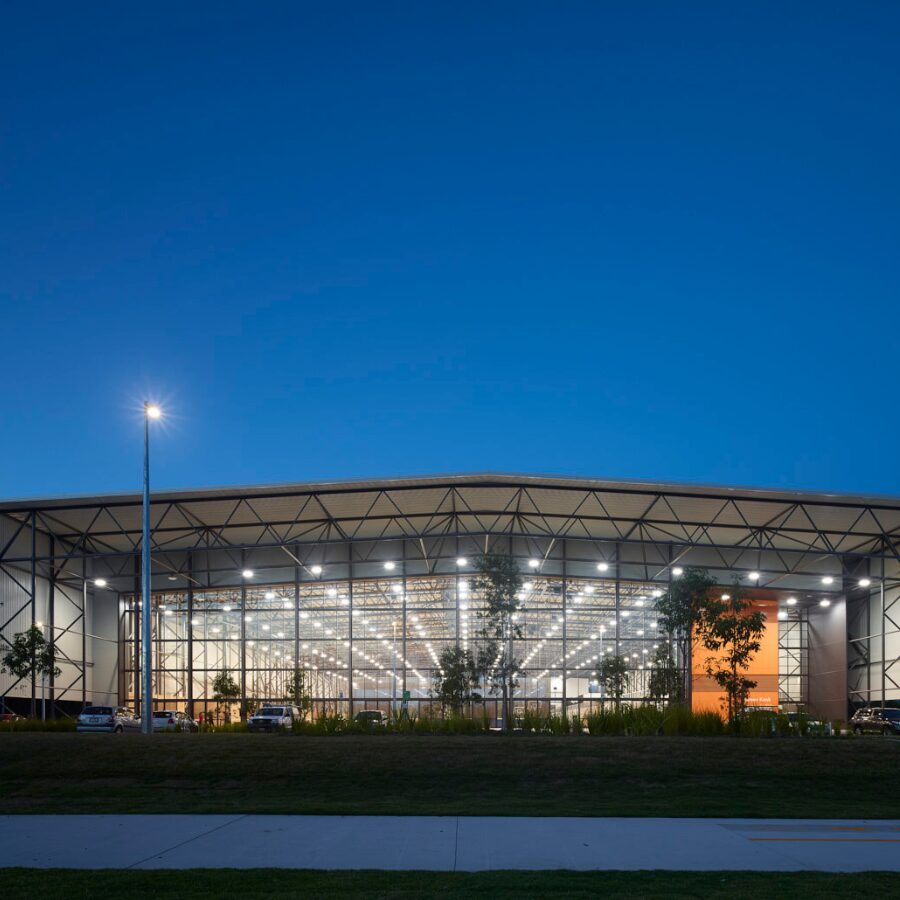
Coomera Indoor Sports Centre: Clear views, right through
The ability to construct long free spans with steelwork has proven critical for this new multi-purpose indoor facility at Coomera that is required to host high profile sporting events with space flexibility and accommodate a range of athletic activities simultaneously under one roof.
Gold Coast Sports and Leisure Centre
Architects BVN worked closely with BlueScope and Kingspan to create cladding panels made from COLORBOND® Metallic steel with tones and colours befitting of a building that evokes sporting excellence, and captures the Gold Coast’s essence.
Gold Coast stadium dominates design stakes
A boutique stadium construction topped half of the categories in the 2012 Steel Design Awards for Queensland. The new home of the Gold Coast Suns AFL team won for its use of lightweight steelwork supporting a membrane canopy and efficient incorporation of standard sized steel sections.

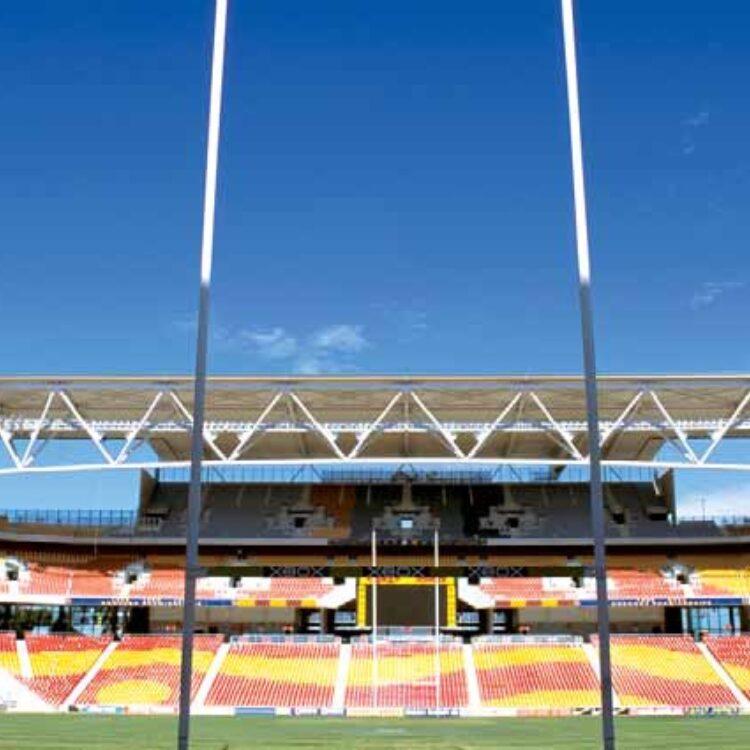
Suncorp Stadium Redevelopment, Queensland
The $280 million Suncorp Stadium Redevelopment transformed the comfort of spectators. The project encompassed a composite steel and concrete grandstand structure on the southern, eastern, and northern sides. A spectacular 23,000 square metre steel framed roof covers the grandstands and spans up to 180 metres.
Wide project array wins 2009 Queensland Awards
The winners of the 2009 ASI Steel Design Awards for Queensland well represented the wide array of important public uses which structural steel excels – a tourism centre, a sports complex, a bridge and a museum.