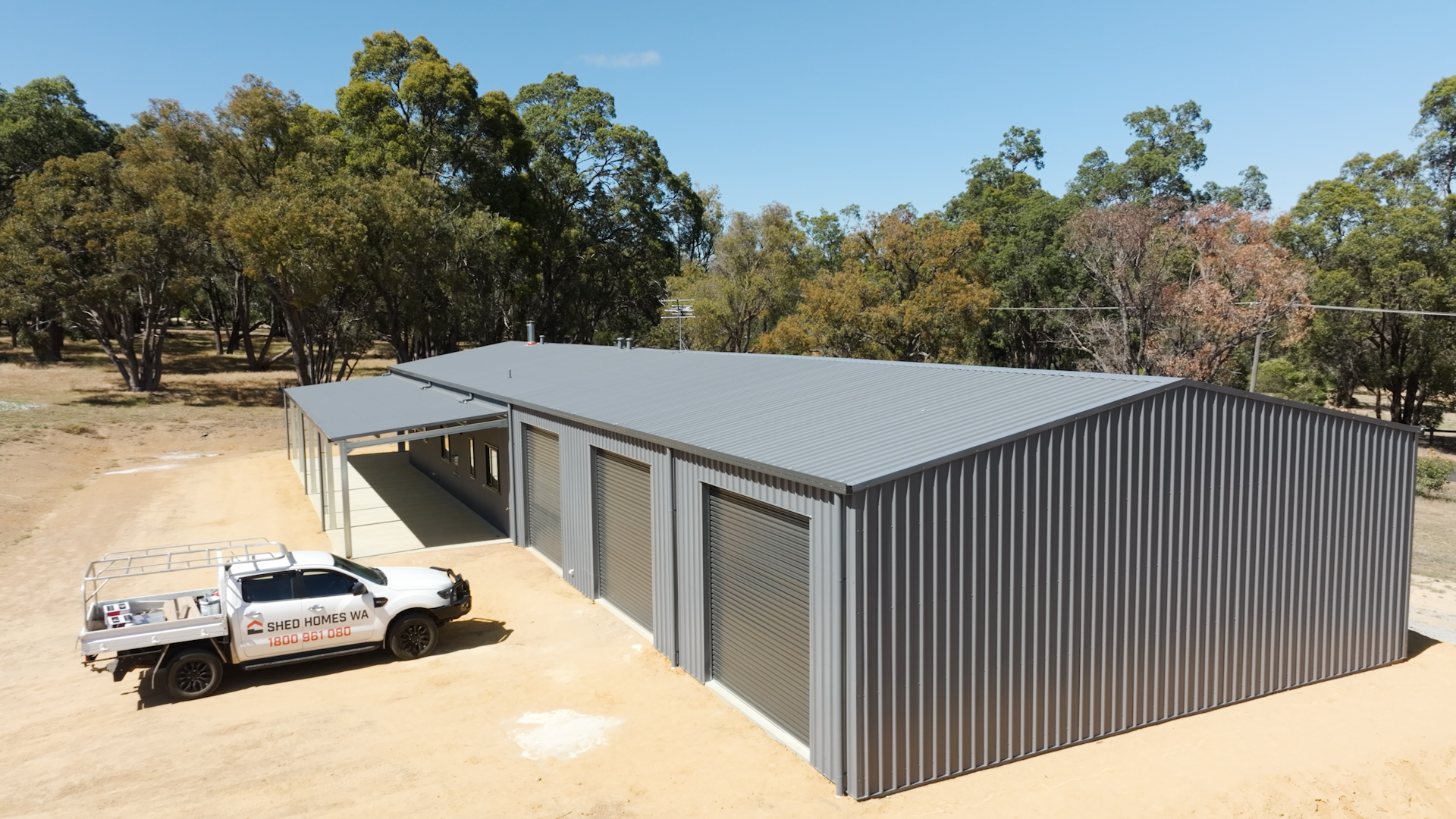
In a housing market hungry for speed, flexibility and value, Western Australia’s Shed Homes WA has found a distinctive niche built on steel, practical design and a sharp understanding of how people actually want to live.
In Western Australia, where distance, climate and practicality shape almost every building decision, Shed Homes WA has built a business around a deceptively simple idea: combine the utility of a shed with the comfort of a modern home, and do it in a way that is faster, more affordable and better suited to regional living.
It is a model that is striking a chord. Shed Homes WA describes itself as a supplier of affordable, durable steel frame kit homes, with designs created for urban, rural and remote settings. The company offers DIY kits, lock-up options and custom builds, positioning its homes as practical, adaptable and easier to personalise than many people might expect.
At the centre of the business is managing director Randall Smith, who says the concept had been forming in his mind for years before it became a company.
“I’d been thinking about it for a long time,” Randall says. “The whole idea was to turn sheds into houses—to come up with something that was cheaper, more economical and faster to build.”
It is an origin story grounded less in trend-chasing than in experience. Randall had spent years in construction and could see the appeal of a more efficient housing model, particularly for country clients who wanted space, durability and flexibility without the cost and complexity of a conventional build. The concept gained momentum when Shed Homes WA began working through how to make the idea work structurally, practically and commercially.
“There had to be a market for it,” Randall says. “What we wanted to do was create a legal, well-designed, comfortable home that kept the practicality people love about a shed.”
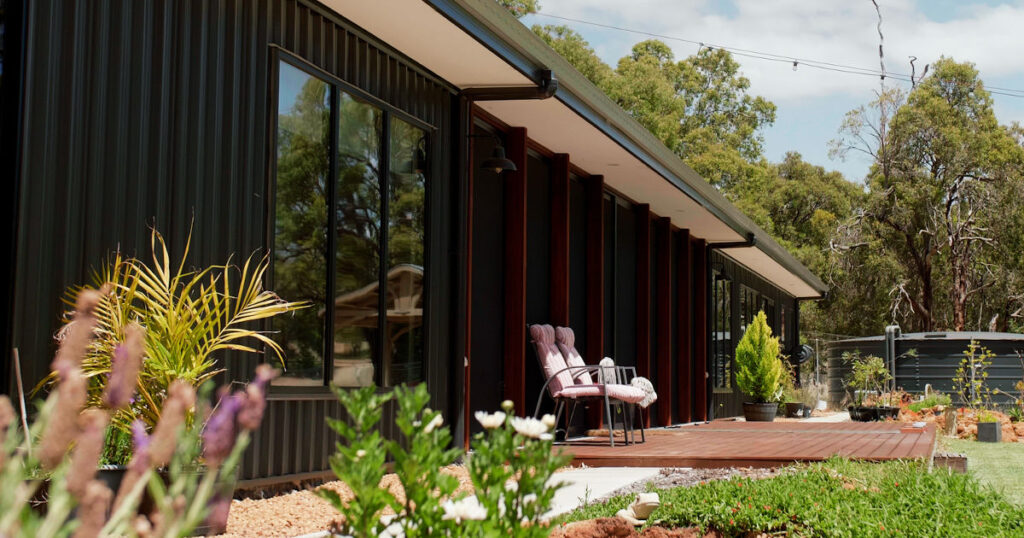
That balance—between utility and liveability—is what gives Shed Homes WA its distinctive place in the market. Their innovative hybrid living solutions combine the practicality of a shed with the comfort of a home. The designs are configured to give owners the sort of large, useful footprints that suit rural and semi-rural life, while still delivering the features buyers expect from a modern residence.
Inside, Randall says, the result is entirely familiar. “Inside, they’re exactly the same as any other steel- or timber-framed house,” he says. “You’ve still got the kitchens, the bathrooms and the living spaces people want. The difference is in the way the building works for your lifestyle.”
That lifestyle component is central. For many of Shed Homes WA’s clients, the attraction lies in the hybrid format itself—the idea that the house and the shed are not separate structures competing for space and budget, but one integrated solution.
“I always thought: what’s better than a house and a shed right next door?” Randall says. “A lot of people can’t afford to build both separately, so the answer was to combine them. That’s where the speed and efficiency come in.”
From a steel industry perspective, that is where the business becomes particularly interesting. Shed Homes WA’s homes are built around steel portal framing systems, often paired with timber internal studs, which gives the company an efficient structural platform for long spans, large openings and generous garage or workshop areas under the main roof.
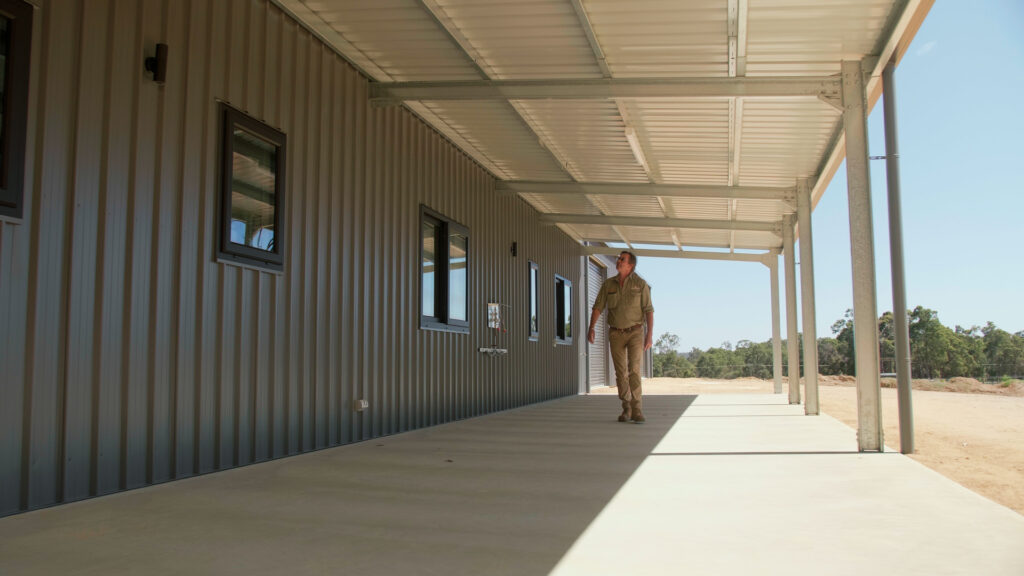
The business consistently highlights durability, adaptability and practical design, with models such as The Lizzie, The Ashlin and The Kiara demonstrating how living zones, garages, patios and verandahs can be integrated into a single steel-framed building envelope.
The company’s standard inclusions also underline that steel-first philosophy. Shed Homes WA lists BlueScope Australian-made cold-formed steel portal sheds with COLORBOND® external cladding among its DIY inclusions, alongside tie-downs, bracing, roofing and insulation systems.
That matters because steel is doing a lot of heavy lifting in this model—literally and strategically. In regional areas, where buildings often need to stand up to demanding environmental conditions while remaining cost-effective to transport and erect, steel framing offers durability, consistency and design flexibility. It also allows Shed Homes WA to create the wide, functional spaces that clients in country areas often prioritise.
Randall is clear that simplicity is part of the formula. “We try to stick with rectangular forms because that helps with both speed and cost,” he says. “The principle is to keep it simple.”
That discipline feeds directly into the company’s value proposition. According to Randall, a typical erection timeline is around five to six months, depending on the size of the house—roughly half the time of a more conventional residential build.
“It’s about half the time of a normal house,” he says. “And in terms of cost, we’re generally around 20 to 25 per cent less. Speed is the biggest advantage.”
Those numbers help explain why Shed Homes WA is attracting interest well beyond its immediate footprint. The company says its kit homes are designed to meet residential standards and are easy to customise, whether clients choose a DIY path or work with one of its partner builders. The process outlined on the website is intentionally straightforward: select a design, finalise the plan, choose a delivery or builder pathway, and move through construction with support from the team.
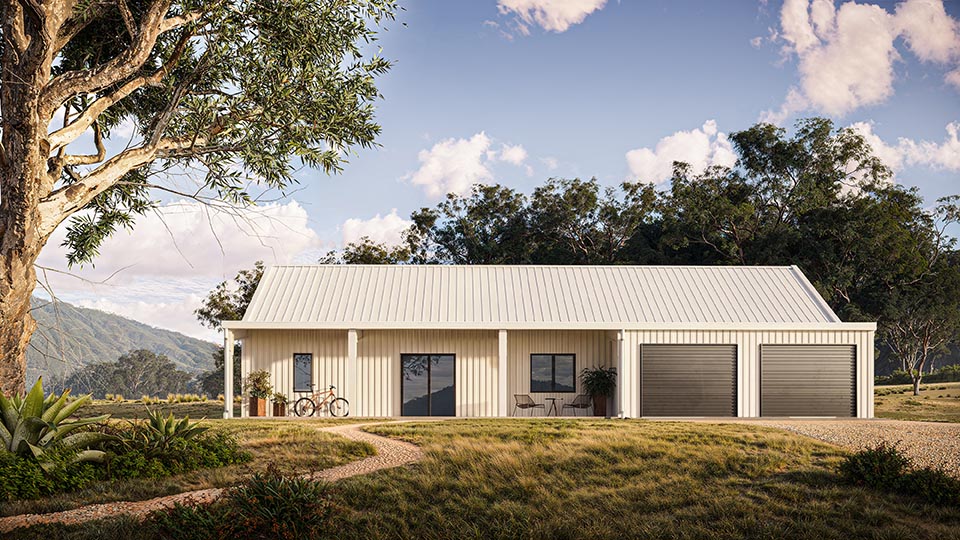
Customisation and flexibility built in
Customisation, meanwhile, remains a major part of the appeal. Although the website showcases a range of standard designs, Randall says they are really there to spark ideas.
“Our base designs are there to give people a starting point,” he says. “We can customise about 90 per cent of what people bring to us. As long as it works within our system, we can usually make it happen.”
That flexibility is particularly important in WA, where site conditions and client priorities can vary enormously from one region to another. Some buyers want ancillary accommodation. Others want a full family home with a substantial integrated garage. Some are building on acreage and need room for machinery, boats, caravans or workshop space.
Shed Homes WA’s range reflects that diversity. The Ashlin
2 x 1, for example, combines a 102 square metre living area with an 82 square metre garage, all within a steel portal framing and timber internal stud system. The larger Kiara 4 x 2 scales that up again, pairing a 154 square metre living area with 148 square metres of garage space under the main roof.
For Randall, though, the business is about more than floor plans and build systems. It is about solving a real housing problem in a way that feels practical, distinctly Australian and commercially scalable.
“It’s gone a lot bigger than I expected,” he says. “We’re getting enquiries from all over Australia. The concept just makes sense to people.”
That national interest is telling. At a time when housing affordability, labour shortages and build times are all under pressure, Shed Homes WA is showing that a steel-based hybrid housing model can offer a credible alternative, particularly in regional and rural markets where practicality is paramount.
Randall believes that appeal will only grow. “I think this style of housing will become much more mainstream, especially in rural areas,” he says. “You need fewer specialist trades, you reduce some of the labour intensity, and you still end up with a home that looks good and lives well.”
That may be the company’s real achievement. Shed Homes WA is not simply selling sheds with kitchens. It is taking the strength, efficiency and adaptability of steel construction and translating it into a housing product that is functional, comfortable and sharply attuned to how many Australians want to live.
In an industry always looking for smarter ways to deliver value, that is a story worth watching.