Membership support over the past 12 months enabled the ASI to achieve the following meaningful progress for the Australian steel industry.
- Successfully lobbied the Federal Government in support of a Safeguard inquiry to investigate a surge in cheap imported fabricated steel (https://www.steel.org.au/what-we-do/advocacy/asi-campaign-on-imported-fabricated-steelwork/).
- Signed a memorandum of understanding to merge the ASI and the National Association of Steel-framed Housing (NASH). The move will result in a stronger combined entity, with significantly greater capability to advocate for the local steel industry.
- Released a ‘traceability’ tech note outlining duty of care obligations on steel stakeholders to ensure compliant fit-for-purpose steelwork in the finished structure (https://www.steel.org.au/news-and-events/news/asi-releases-traceability-tech-note-tn017/).
- Continued to monitor government infrastructure projects where local content is mandated and sought enforcement where regulations/codes were not followed.
- Represented the steel industry at the Federal Government’s Minerals and Metals Processing Roundtable chaired by Federal Industry Minster Tim Ayres. Called for more timely and effective trade measures to protect the local steel industry against a surge in low-priced imported steel. Continued to provide advice to the Federal Government’s Green Metals Advisory Panel.
- Ramped up an advocacy campaign promoting local steel’s capability to service the booming electricity and alternative energy markets.
- Continued to advocate for regulatory controls on the export of unprocessed steel scrap via a submission and presentation at a hearing to the inquiry into decommissioning oil and gas infrastructure in Victoria (Bass Strait).
- Successfully supported advocacy for an east-coast gas reservation to combat high local energy costs. On 7 May, 2026, the Albanese government required local gas producers to set aside 20% of export volumes for the Australian market.
- Attended a consultation meeting with the Anti-Dumping Commission to discuss how trade data is currently used by industry. Attended an online workshop on improving access to the anti-dumping system. Progress made in identifying opportunities to improve SME access to the system.
- Promoted the local steel supply chain’s capability to build infrastructure for the 2032 Brisbane Olympics in meetings with government and suppliers, and via news stories and ASI web pages.
- Presented online to a global meeting of trade ministers and diplomatic staff in South Africa on steel excess capacity. The meeting provided unprecedented international access and profile for the Australian steel industry.
- Presented to the Ministerial Industry Forum on Trade Remedies Reform hosted by Federal Industry Minister Tim Ayres about issues and shortcomings with existing trade measures, including anti-subsidy and anti-dumping investigations being essentially inaccessible to SMEs due to the cost, extended timeframes, and complexity.
- Successfully advocated for amendments to the WA Industry Participation Scheme to encourage local content in government projects.
- Met with the Federal Department of Industry, Science and Resources to discuss ‘early warning’ metrics that could be employed to provide evidence of likely impending dumping or subsidy behaviour by steel importers.
- Advocated for the inclusion of whole-of-life carbon reduction measurement for building materials at the project level.
- Participated in a Citi Group panel discussion with Federal Industry Minister Tim Ayres exploring investment opportunities in green steel and iron.
- Initiated discussion with BlueScope about the proposed constructsteel life cycle analysis study on data centres.
- Met with Indonesian steel industry associations in Indonesia to discuss issues of shared interest.
- Lodged a submission to the Department of Industry, Science and Resources’ Strengthening Australia’s Trade Remedies System consultation group, seeking:
- Improved ability of industry associations or similar organisations to collectively represent small businesses.
- Less onerous financial reporting requirements on SMEs.
Changed identity disclosure requirements to reduce the risk of retribution by large clients on SMEs.
Legal aid-style advice to small businesses suffering hardship circumstances.
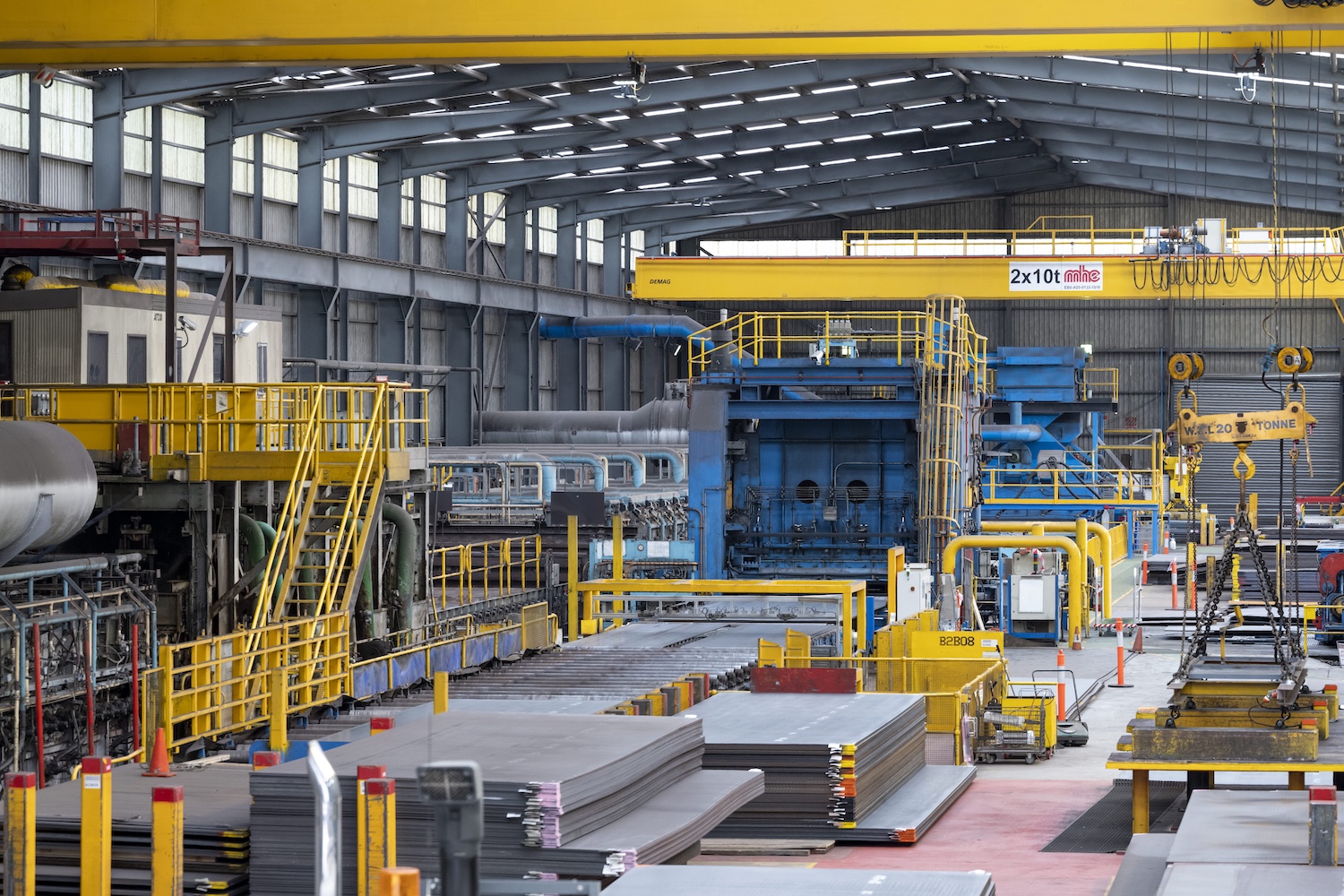
Image above: Bisalloy Steels, Australia’s only manufacturer of high-strength and wear-resistant quenched and tempered steel plate.