For many steel service centres and distributors, technology has long been viewed as a necessary tool rather than a strategic advantage. Inventory systems, spreadsheets, accounting platforms and production schedules have often been stitched together over years, sometimes decades, to support the very particular demands of selling, processing and moving steel.
For 4GL Solutions, the opportunity sits in that complexity.
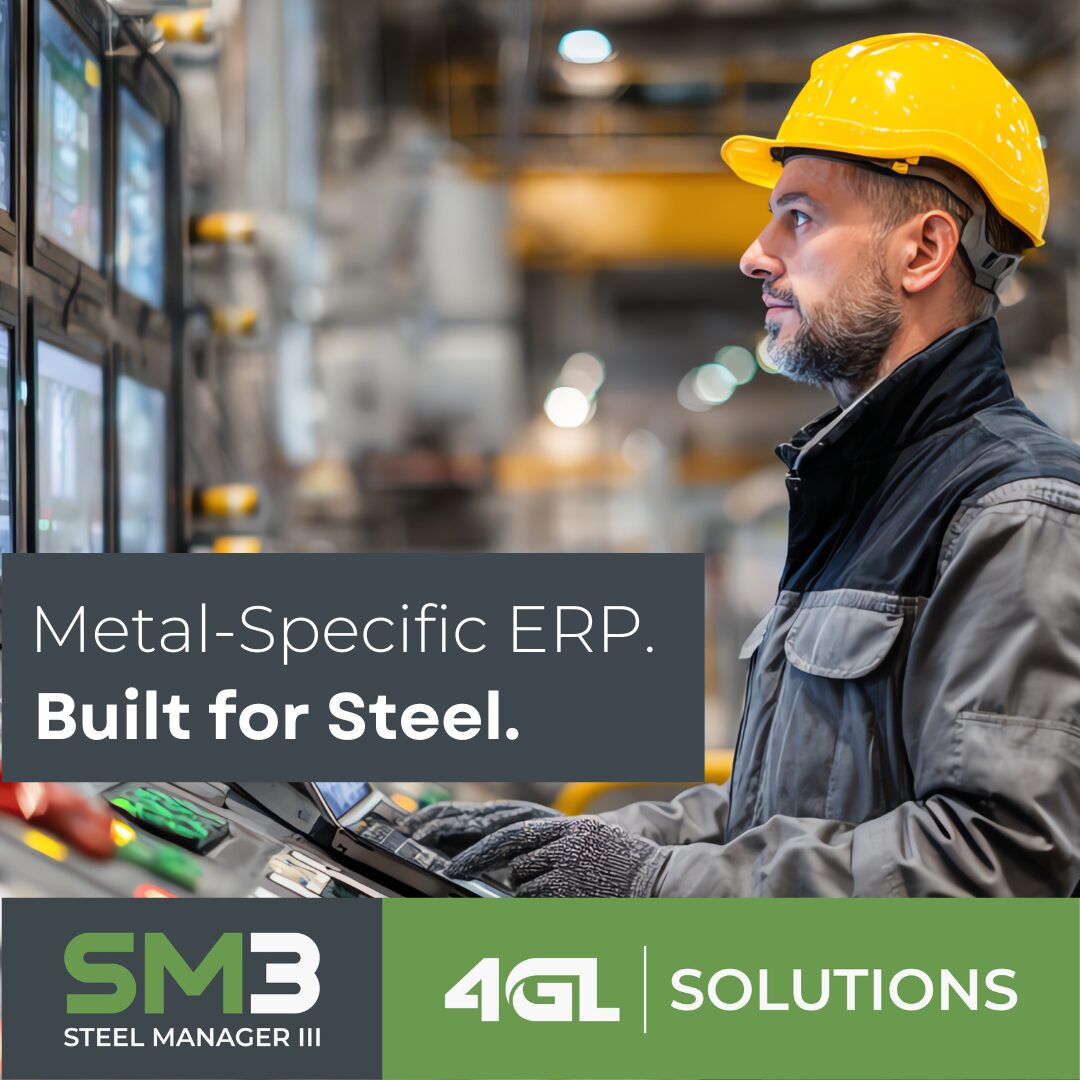
Founded in 1984, the company has spent four decades developing enterprise resource planning (ERP) software specifically for steel service centres, metal centres and steel distributors. Its flagship platform, Steel Manager III, is designed to manage the day-to-day realities of the metals industry: inventory, purchasing, sales, inside and outside processing, production scheduling, material test reports, shipping, accounting, reporting, barcoding and customer relationship management.
According to Tim Pearson, Business Development Manager, 4GL’s focus on one vertical market has been central to the company’s development.
“4GL Solutions is a software company that’s vertical in the metals market,” Pearson says. “We supply ERP solutions specifically for metal centres and steel distributors only. We don’t do anything outside of steel and metal.”
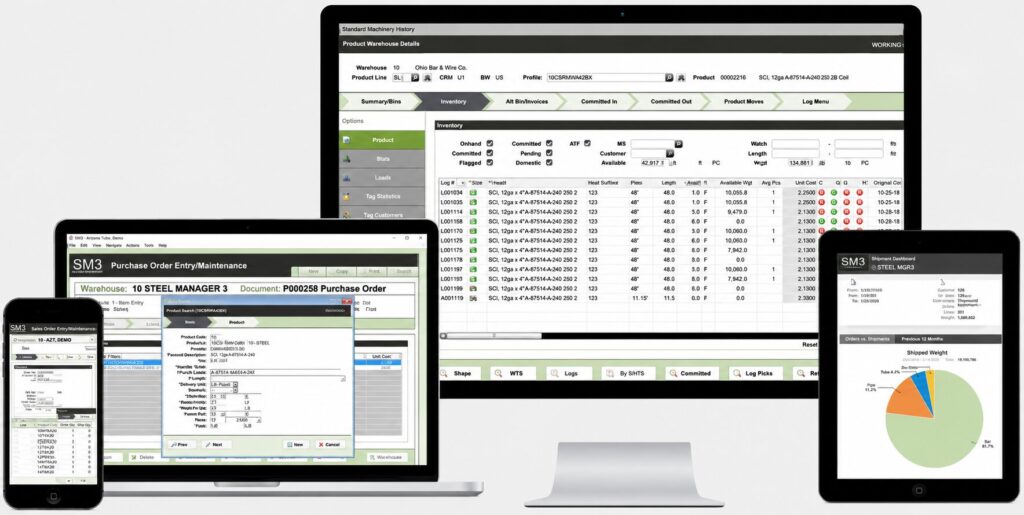
An ERP designed specifically for steel
That specialisation matters. Steel distribution is not a generic sales environment. Products may be sold by length, weight, sheet, bundle or piece. Material can be cut, nested, processed, transferred between sites, certified, traced, invoiced and delivered in many different ways. Customers require speed and certainty, while compliance and documentation expectations continue to increase.
As Pearson puts it, “Generic ERPs are quite broad and therefore they miss a lot of the things that make steel steel.”
Those “things” include traceability, remnant management, processing, multiple units of measure, real-time inventory visibility and the flexibility to support different operational models. For 4GL, the aim is not to force steel businesses to operate like businesses in other sectors, but to reflect the way metal centres actually work.
“Unlike grocery stores, all steel companies rhyme, but none of them agree,” Pearson says. “Every distributor and metal centre you go to, they look similar, but they all have their own unique features that make them work well.”
That understanding comes not only from the software itself, but from the people behind it. Pearson says a large proportion of 4GL’s customer support, implementation and research and development teams have direct steel industry experience.
“I like to say that we are steel people selling software, we’re not IT people selling software,” he says.
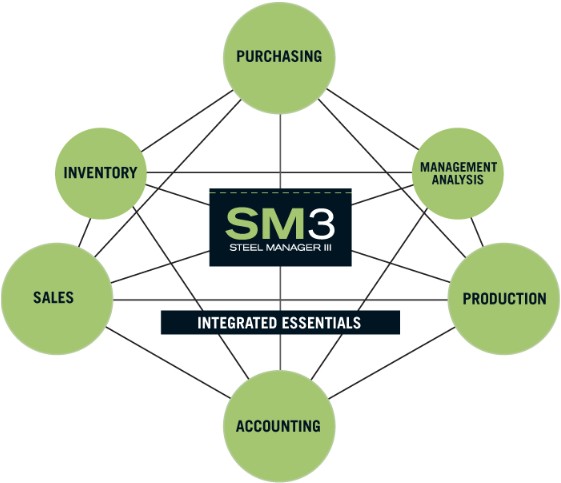
An integrated partnership model
It is an important distinction, particularly for an industry where many businesses are family owned, operationally lean, and understandably cautious about major systems change. Introducing a new ERP platform is rarely just a technology project. It touches sales, purchasing, production, warehousing, accounts, dispatch and customer service. For businesses that have developed their own processes over many years, implementation can feel disruptive.
Pearson understands that hesitation. Before joining 4GL, he spent about 20 years in the steel sector, including 15 years in a family owned business. That experience shapes the way he approaches digital transformation.
“We’ve seen the resistance, we know what that resistance is,” he says. “Most of us that came from the industry have come through this process before. So we’ve been on both the implementing side and the implementee side.”
4GL’s implementation model is built around partnership rather than simple installation. The company provides data migration, training, project management, technical services and business process review. Its approach encourages customers to build internal ownership of the system, including through leadership teams that become part of the implementation process.
“We don’t just walk in and turn it on for you, train you and walk away,” Pearson says. “You’re part of the process. We make it a partnership.”
That approach is increasingly relevant as steel businesses look for efficiency gains across their operations. Pearson says the sector’s needs have evolved significantly, particularly around accuracy, reporting, margins, traceability and customer service.
“The biggest changes historically have been a need for efficiency and a need for accuracy, particularly around things like inventory and visibility of reporting and margins,” he says.
Up-to-the-second inventory accuracy
In the steel supply chain, inventory accuracy has immediate commercial value. A salesperson needs to know what is available, where it is located, whether it is suitable for a particular job, what it will cost to process, and when it can be delivered. When that information is delayed or uncertain, it can affect margins, customer confidence and production flow.
Pearson says one of Steel Manager III’s strengths is up-to-the-second inventory accuracy.
“Whenever something is touched on the floor, it immediately updates in the system,” he says. “So if I’m a salesperson sitting at my desk talking to my customer and I’m looking at the screen, I know it’s up to the second accurate.”
End-to-end automatic traceability
Traceability is another area where steel-specific software can make a tangible difference. For service centres and distributors, material test reports and certifications are not administrative extras; they are central to customer confidence and compliance.
Without an integrated system, staff may need to manually search for certificates, match documents to material, and ensure information follows steel through each cut or process. That creates time pressure and the risk of human error.
In Steel Manager III, Pearson says traceability can be attached from the moment steel enters the system and maintained as material is processed.
“You can receive a piece of steel and that test certificate is attached to that piece of steel,” he says. “At any point you could cut that piece of steel a thousand times if you want. Every cut piece has got that full traceability without anyone having to get involved.”
The benefit, he says, is that people can spend more time with customers, less time chasing paperwork and can be confident in complete accuracy.
“The more you can keep your people talking to customers and selling and away from the admin and looking up numbers and trying to find the right certs, the better,” Pearson says.
Digitalisation for a competitive edge
Looking ahead, Pearson believes the steel sector is entering a new phase in its relationship with technology. While the industry has not always been an early adopter, he is seeing a shift as more businesses recognise that digital systems are becoming integral to competitiveness.
“There is a noticeable uptick in both the industry wanting technology but also recognising the need for it,” he says. “That’s where the world’s going and we need to keep up.”
Artificial intelligence is one area 4GL is watching closely, particularly where it can support practical improvements in areas such as purchase orders, reorder reports, traceability and workflow automation. The focus, he says, is not on novelty for its own sake, but on tools that can deliver clear operational value.
“These are not just bells and whistles that we want to tag on,” Pearson says. “We’re developing tools that are actually going to add a competitive advantage to not just our customers, but the market in general.”
For 4GL Solutions, the future of steel software is grounded in the same principle that has shaped the business since 1984: understanding the industry first. In a sector where every tonne, cut, certificate and delivery matters, that knowledge remains a powerful foundation.
For further details, visit: 4glsol.com