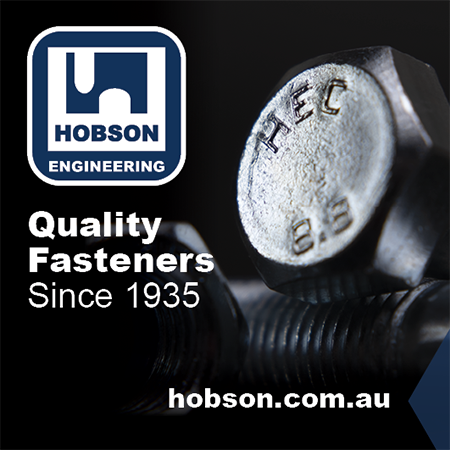
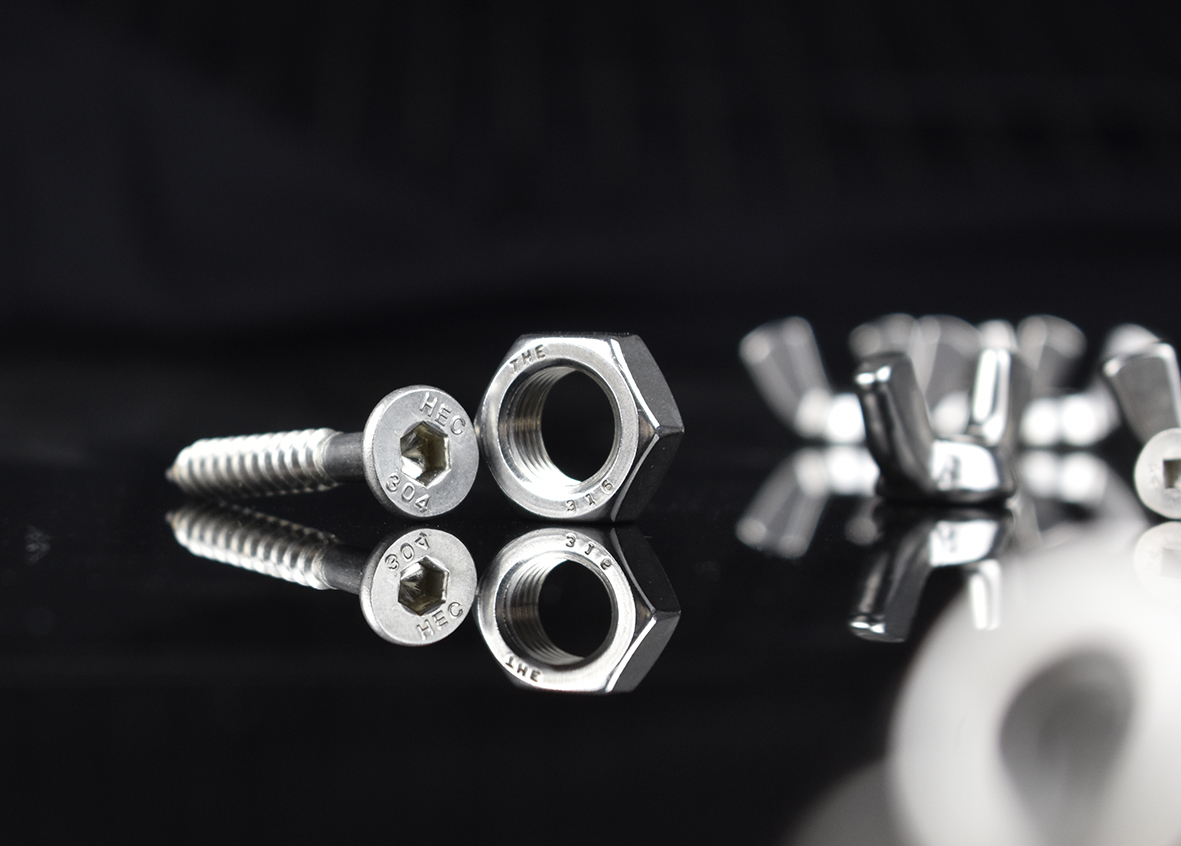
Stainless steel fasteners are often treated as a simple upgrade. Hobson’s Graham Bush explains why the right grade, strength class, installation method and maintenance regime all matter.
In steel construction, fabrication, infrastructure and manufacturing, stainless steel fasteners are often seen as the premium option: cleaner, more durable and more corrosion resistant and, by assumption, stronger.
But according to Graham Bush, National Business Development Manager at Hobson, that assumption can lead specifiers and installers into trouble.
“The biggest misconception is that stainless steel is rust-proof,” Bush says. “It’s corrosion-resistant, not corrosion-proof. Its performance depends on the grade, the environment, the conditions, how it is installed and the ongoing maintenance.”
It is a simple distinction, but an important one. Stainless steel earns its reputation because it contains chromium, which forms a passive protective oxide layer on the surface of the material. If that passive film is damaged in normal service, it can reform. However, in the wrong environment or with the wrong specification, poor installation or a lack of maintenance—that protective system can become compromised.
For Hobson, which has supplied fasteners to Australian industry for generations, the practical message is clear: stainless is not one material, and a stainless fastener is not “just a bolt”.
“A bolt’s not just a bolt,” Bush says. “There are so many different varieties. You need to understand where it is being used, what it will be exposed to, what strength is required, how it will be installed, how long it needs to last, and whether maintenance will be possible.”
304, 316 and the limits of “marine grade”
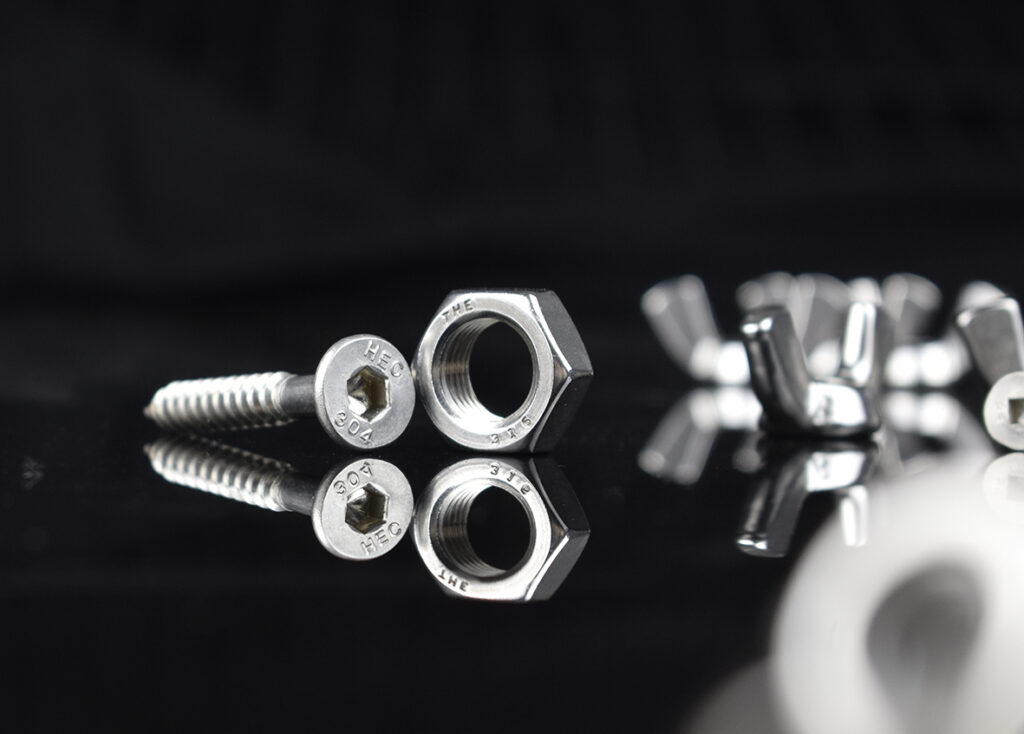
Two of the most familiar stainless steel grades are 304 (A2) and 316 (A4). They are widely used, readily available and suitable for many applications. But they are not interchangeable, and neither should be treated as a universal answer.
The key difference is that 316 includes molybdenum, which improves resistance to chloride attack and pitting corrosion. That makes it a better option than 304 in many coastal, marine and chemical environments. However, Bush warns that the phrase “marine grade” can give a false sense of security.
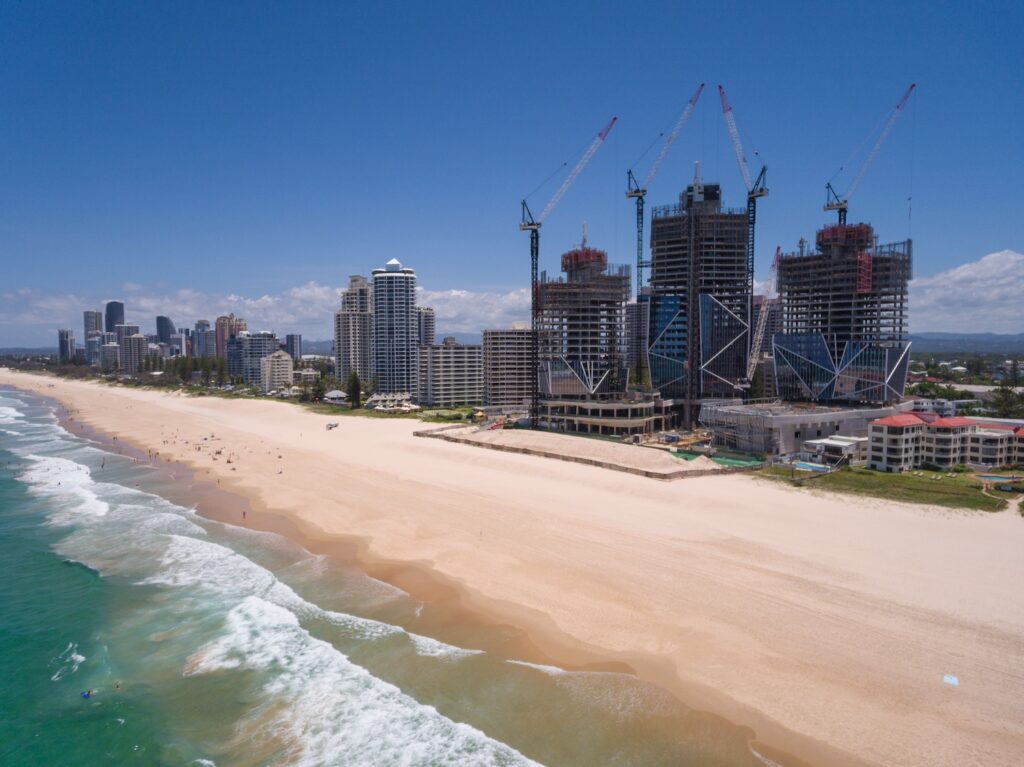
“316 is called marine grade to a certain extent,” he says. “If it’s in a coastal area, and not in a splash zone, it will perform well. But if it is in a splash zone, then you need to be looking at duplex or a higher grade. 316 won’t survive long term in aggressive marine environments where it is being subjected to constant wetting and drying.”
That wetting and drying cycle is particularly important. Salt deposits can accumulate on the surface of the fastener. Moisture and chlorides can then concentrate in crevices, under washers, in threads, beneath deposits, and in poorly ventilated or poorly drained areas. In those conditions, pitting and crevice corrosion can develop even in materials that might otherwise perform well.
Tea staining is another common issue, particularly in Australian coastal environments. It appears as brown surface discolouration and is often mistaken for rust.
“Tea staining isn’t rust in the same way people think about carbon steel rust,” Bush says. “It is often more of an aesthetic issue, but it tells you something about the exposure, surface condition and maintenance of the stainless steel.”
The risk is higher where stainless steel is exposed to airborne salts but is not naturally washed by rain—under verandahs, canopies, roofs or sheltered coastal structures, for example. Surface finish also plays a role. Smoother surfaces hold fewer contaminants and are easier to clean, while rougher finishes, crevices and accumulated dirt increase the likelihood of staining and localised corrosion.
Strength is not automatic
Another common misconception is that stainless steel fasteners are always stronger than carbon steel fasteners. In reality, strength and corrosion resistance are separate considerations, and both need to be specified.
Bush explains that stainless fasteners are work hardened rather than heat treated. As the material is drawn and formed, its mechanical properties change. This means diameter, manufacturing method and fastener class all matter.
“People need to understand the mechanical properties,” he says. “Stainless is work hardened, not heat treated in the same way many carbon steel fasteners are. As a result, the larger the diameter, the less work hardened the product may be. If you need 700 or 800 MPa, or a particular property class, you have to ask for it.”
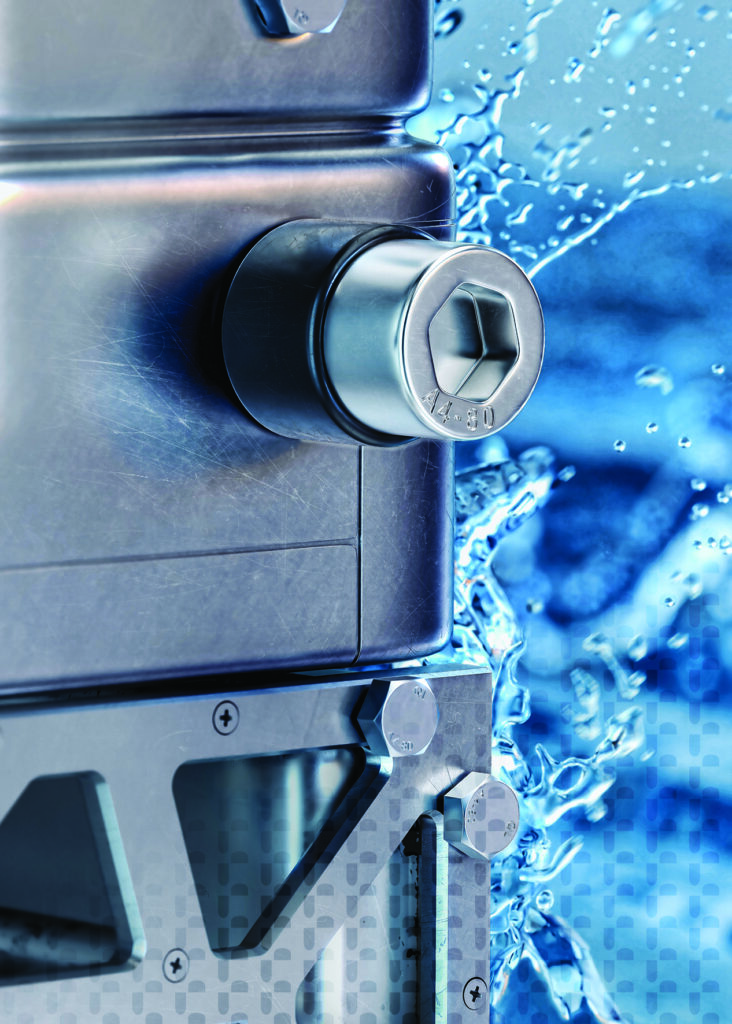
This is where Hobson’s range becomes important. The company supplies standard 304 and 316 stainless fasteners, but also offers the Neptune range, which Bush says provides A4-80 across diameters for applications where higher strength is required, such as water infrastructure and flanged connections.
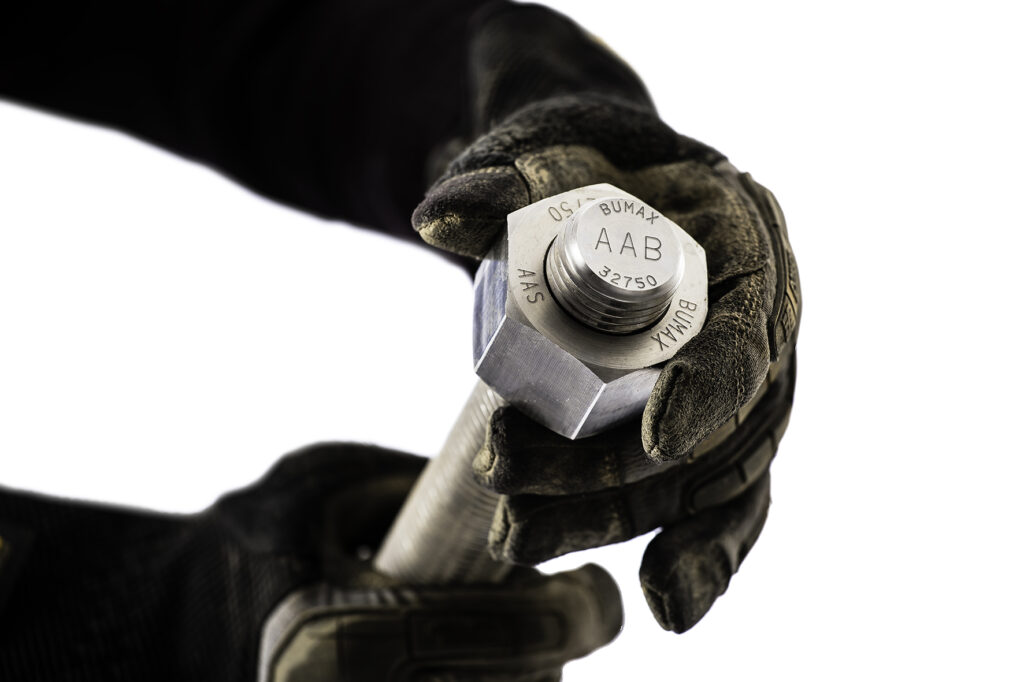
For more demanding environments, Hobson also offers BUMAX® high-performance stainless fasteners. BUMAX is designed for applications where engineers need the combination of higher stainless corrosion resistance and high mechanical performance than what is offered by standard A4-80 fasteners.
“BUMAX is a superior product,” Bush says. “It gives us multiple options up to very high mechanical properties and very high corrosion resistance, including products that can suit defence, offshore, marine and water treatment applications. It is an important product for the east coast of Australia, particularly where access is difficult and performance is critical.”
BUMAX products, including BUMAX® 88, BUMAX® 109 and BUMAX® DX 129, are designed to bridge a gap that many engineers will recognise: the need for high strength, ductility and corrosion resistance in one fastener system.
In demanding applications, that can help avoid the trade-off between a high-strength coated carbon steel fastener that may be vulnerable to coating damage or corrosion, and a standard stainless fastener that may not meet the required strength class. BUMAX options can even be a potential alternative to more expensive and specialised Nickel based alloy fasteners and Titanium fasteners.
Galling: the installation problem that catches people out
Even when the correct stainless grade and strength are specified, installation can still make or break performance.
One of the most common stainless fastener issues is galling. It can occur when mating stainless threads seize during installation, effectively cold welding together under friction and heat. Once severe galling occurs, the nut and bolt often cannot be separated without cutting.
“Galling is more common in stainless than most materials,” Bush says. “It is cold welding. The stainless threads effectively weld together. They have a thin oxide layer, but when you have larger diameter bolts, higher loads and tooling operating at high speed, the friction and temperature can remove that layer. Then you get metal-to-metal contact, adhesive wear and seizing.”
The causes are practical and, in many cases, preventable. High installation speed, excessive torque, dirty threads, poor-quality surfaces, burrs, lack of lubrication and the use of impact tools can all increase galling risk.
Bush says many of Hobson’s stainless fasteners are supplied with a thin wax coating to assist installation, but good site practice remains essential.
“Speed is the biggest factor,” he says. “Slow the installation down. Use the right lubricant, use the right amount, keep the threads clean, and avoid impact tools where possible.”
Lubrication needs care. Too little can increase friction and heat, while the wrong lubricant or too much lubricant can change the tightening behaviour of the assembly. Once lubrication is introduced, torque values may need to be adjusted because friction has changed.
That is a critical point for fabricators and installers. Stainless steel fasteners are not simply installed the same way as structural carbon steel bolts or commodity fasteners. Cleanliness, tooling, speed, torque and lubricant selection all influence the result.
“In stainless, it is not just the product,” Bush says. “It is how it is installed on site.”
Galvanic corrosion and material compatibility
Material compatibility is another area where assumptions can be costly. Stainless steel fasteners are often used alongside carbon steel, galvanised steel, aluminium, weathering steel, fibre-reinforced polymer and other materials. In some conditions, those combinations are perfectly manageable. In others, they create galvanic corrosion risks.
Galvanic corrosion occurs when dissimilar metals are electrically connected in the presence of an electrolyte such as moisture or saltwater. The severity depends on the metals involved, the surface area ratio, the level of moisture, salt exposure and whether electrical continuity exists.
Bush says the concern is highly dependent on the environment.
“In dry indoor conditions, the risk may be very low,” he says. “But in exposed marine or industrial environments, it can become a serious issue. It comes down to the galvanic series and which material is more anodic or cathodic.”
In practice, the wrong combination can cause the surrounding material to corrode, even when the stainless fastener itself appears unaffected. Mitigation can include isolation washers and sleeves, coatings, sealants, tapes, drainage detailing and a proper compatibility review at the specification stage.
Carbon steel contamination is another practical issue. Grinding, cutting or drilling carbon steel near stainless steel can embed iron particles into the stainless surface. Those particles can then rust and create staining or localised corrosion.
Keeping stainless components clean during storage, handling and installation is therefore more than a matter of presentation. It is part of corrosion management.
Specification mistakes are lifecycle mistakes
Many stainless fastener failures begin before installation, at the specification stage. Common mistakes include defaulting to 304 or 316 without assessing the environment, overlooking hidden crevices and water traps, ignoring strength requirements, mixing incompatible materials, focusing only on the lowest purchase price, and treating all stainless products as equivalent.
“The cheapest fastener isn’t always the best for the application,” Bush says. “It’s not just price. It’s the right product for the application—strength, corrosion resistance, installation, maintenance and lifecycle.”
For long-life infrastructure, mining, utilities, marine, water treatment and safety-critical applications, documentation also matters. Test certificates, traceability and reputable supply help provide confidence that the fastener being installed is the fastener that was specified.
Hobson has invested heavily in testing, certification and traceability, including product testing capability and batch-level documentation. Bush says that is increasingly important as infrastructure owners, utilities and major projects place greater emphasis on compliance.
“For critical applications, you need assurance and certainty that what you are buying is what you are getting,” he says. “Traceability means that if there is ever a quality issue, you can quickly trace the product. In infrastructure, mining, utilities and safety-critical applications, that matters.”
Three rules for better stainless fastener selection
For engineers, specifiers, fabricators and installers, Hobson’s advice can be reduced to three practical rules.
First, match the grade to the environment. Do not assume 304, 316 or “marine grade” will automatically suit every application. Understand the actual exposure: indoor, outdoor, coastal, splash zone, submerged, industrial, chemical, wastewater, food processing, pool, marine or mining.
Second, understand both corrosion resistance and mechanical properties. Stainless is not automatically stronger. If a project requires a particular strength class, proof load, tensile strength, ductility, fatigue performance or certification, specify it clearly.
Third, treat installation as part of the specification. Galling, contamination, over-torquing, incorrect lubrication and poor tooling can compromise an otherwise well-selected fastener.
“Match the grade to the environment,” Bush says. “Always understand the material and mechanical properties. Installation matters as much as material selection. And think lifecycle, not purchase price.”
That lifecycle view is ultimately where stainless steel fasteners deliver their value. When correctly selected, installed and maintained, they can provide long-term performance in some of Australia’s toughest operating environments. But they are not magic, and they are not maintenance-free.
The best outcome comes from the right fastener, in the right grade, with the right strength, installed the right way.
As Bush puts it: “A properly specified and correctly installed fastener should deliver the required performance throughout the intended service life—not simply survive installation day.”
For more information, visit: hobson.com.au